Closing the loop: how Aboriginal tourism is building circular economies
Many First Nations-owned and -guided businesses are adopting circular economy principles, where everything has a place and purpose.
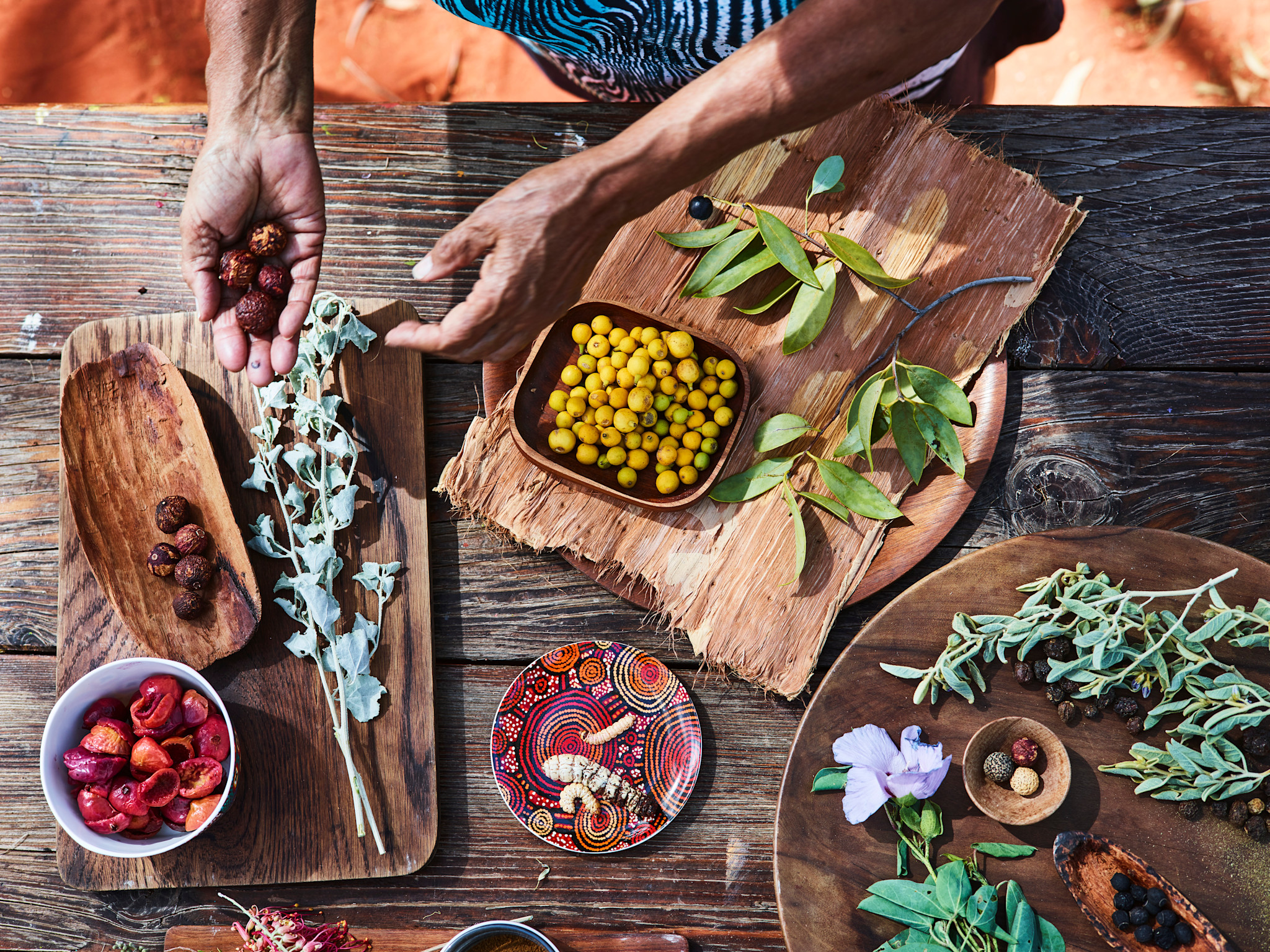
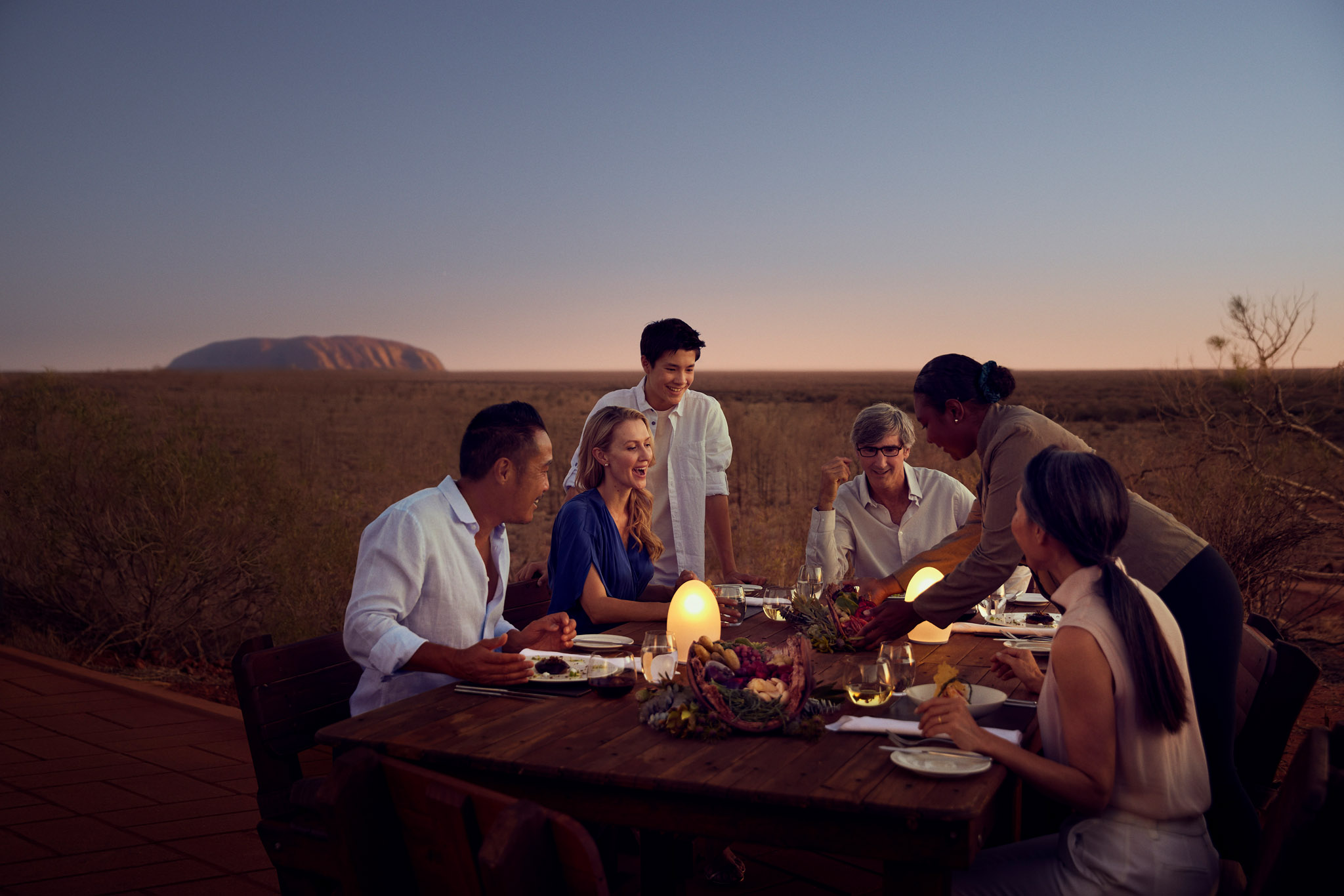
Bush foods star on restaurant menus at Voyages Tourism Australia’s Ayers Rock Resort in the Northern Territory © Tourism Australia
Across Australia, Discover Aboriginal Experiences operators are proving that tourism doesn’t have to follow a linear path. Instead of the traditional extractive model – take, use, dispose – many First Nations-owned and -led businesses are adopting circular economy principles, where everything has a place and purpose.
These systems are closed-loop by design, benefitting not only the visitor, but also the environment and local community. This is tourism grounded in reciprocity – where resources, knowledge and experiences are circulated and shared for collective good.
Here are some of the standout examples.
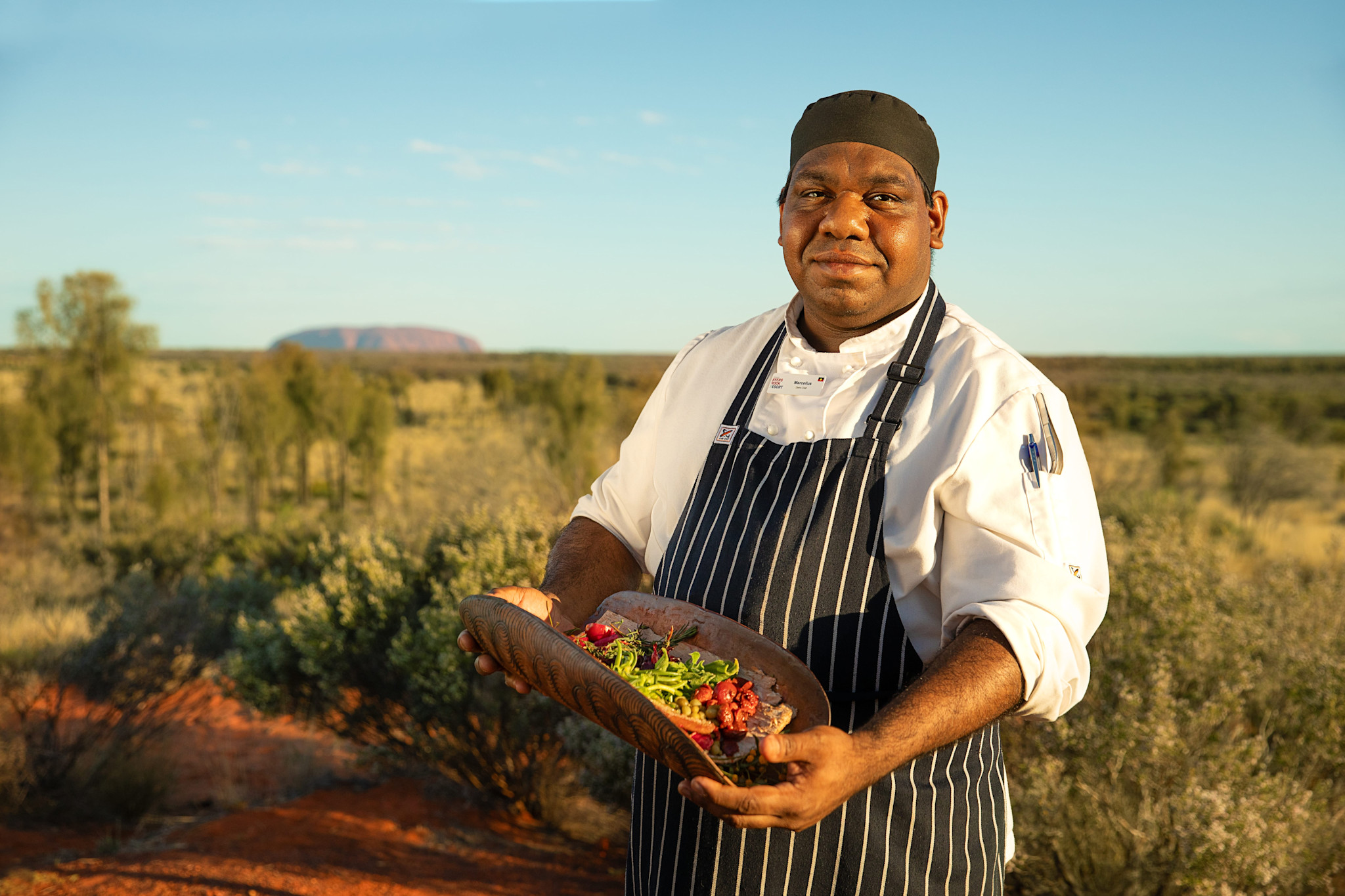
Showcasing cuisine prepared by Indigenous chefs at Voyages Tourism Australia’s Tali Wiru dining experience in the Northern Territory © Tourism Australia
Uluru: From classroom to cafe to culture
Operator: Voyages Indigenous Tourism Australia
On Anangu Country, visitors to Uluru often leave with more than stories – they leave with deeper respect for what community-built systems can look like. At the heart of Ayers Rock Resort is the Kulata Academy Cafe, a powerful training ground for local Aboriginal youth via Voyages’ National Indigenous Training Academy (NITA). Here, hospitality is not just a job, but a skillset passed on and paid forward. Students learn food prep, barista techniques, and front-of-house confidence, all while grounded in their own culture and story. The cafe itself creates minimal waste, composts where possible, and sources many ingredients locally.
Graduates of the academy gain nationally recognized qualifications, and are then guaranteed employed across the resort’s venues – including at Tali Wiru, the premium dining experience under the stars – ensuring the benefits stay within community and culture. Visitors get more than a meal: they witness a system that sustains its own.
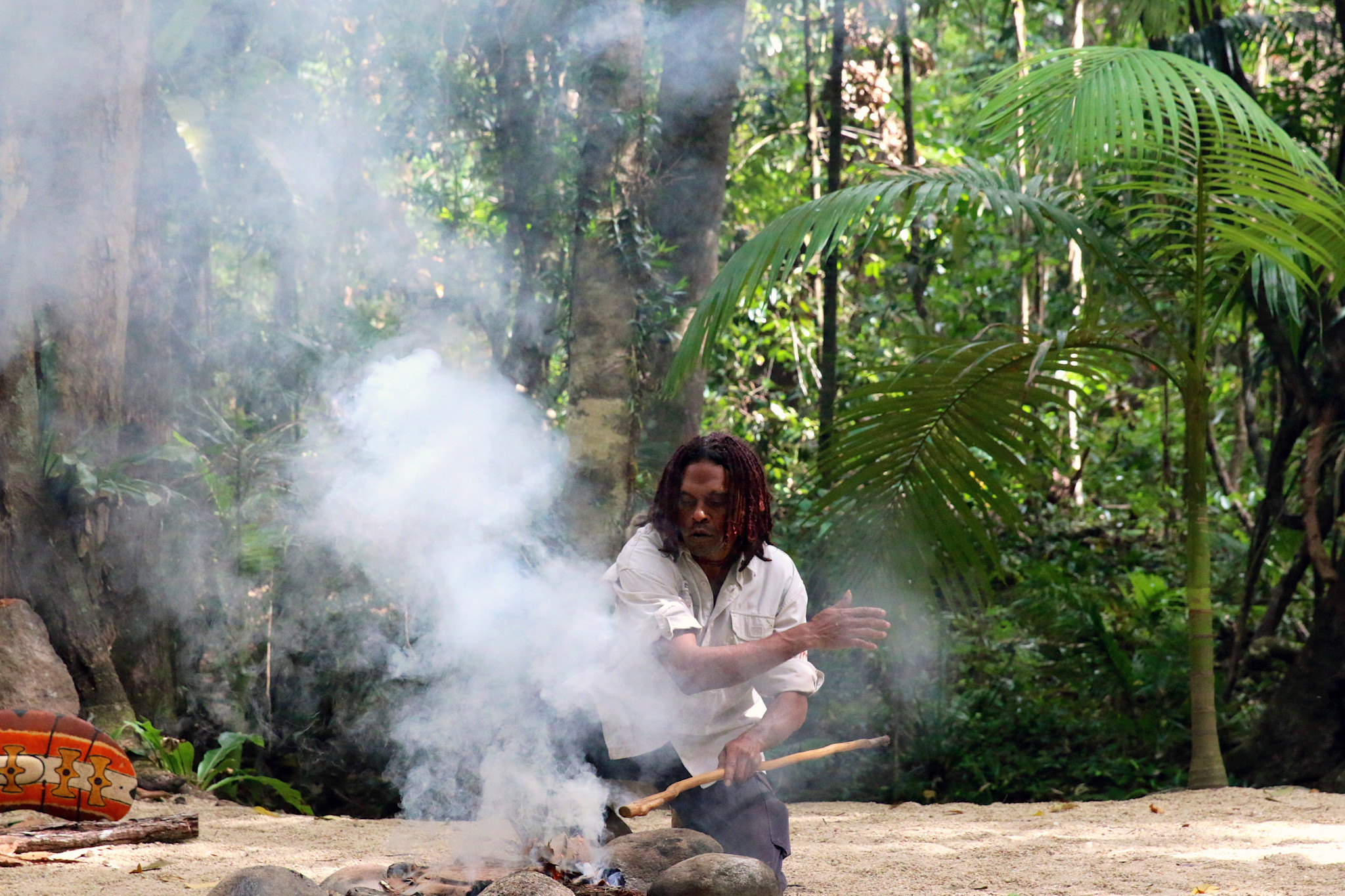
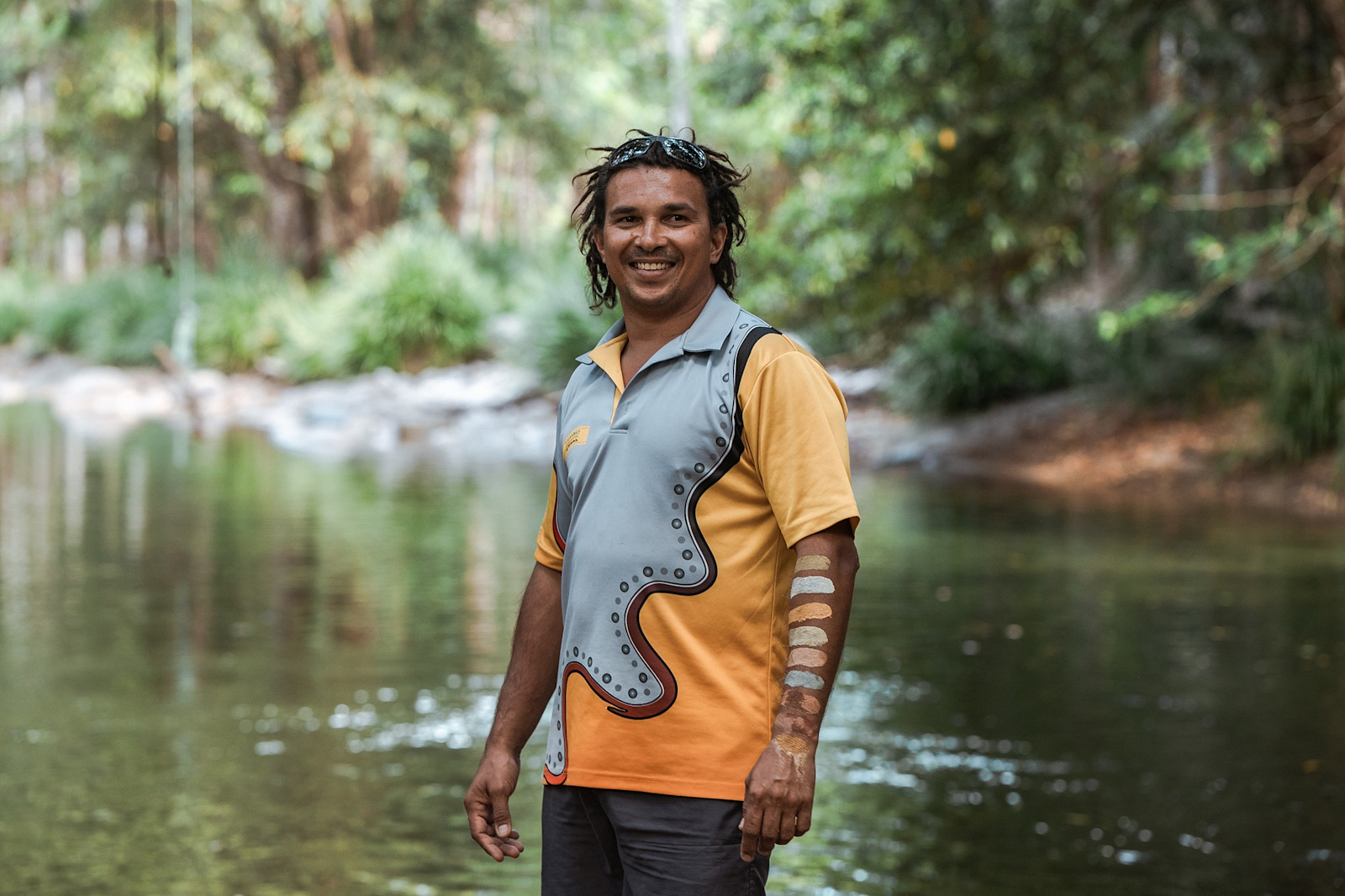
Smoking ceremony, Voyages Tourism Australia – Mossman Gorge in Queensland © Tourism Australia
Mossman Gorge: eating and earning on Kuku Yalanji Country
Operator: Voyages Tourism Australia
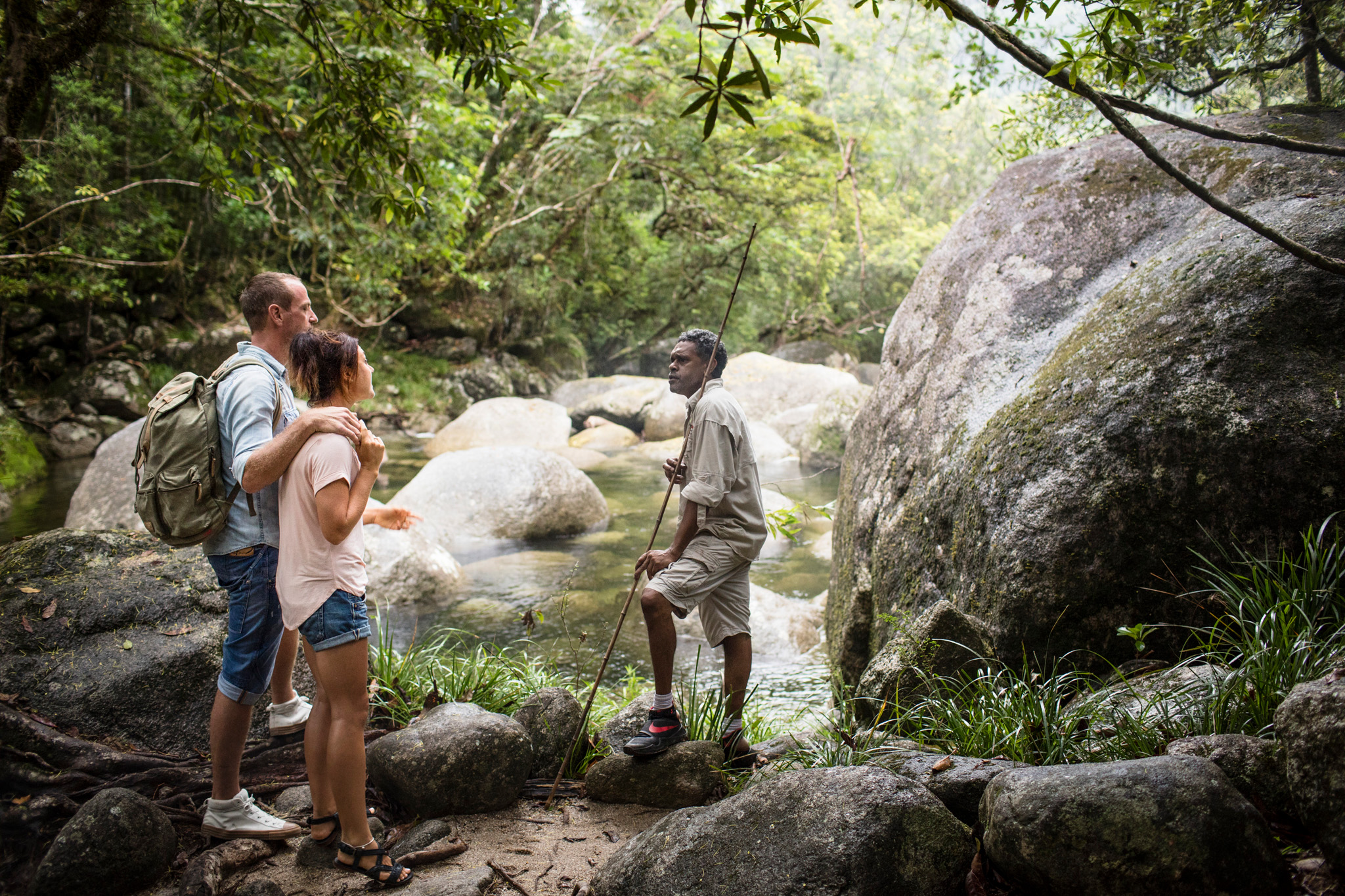
In the lush rainforests of Tropical North Queensland, a similar model operates at the Mayi Cafe and Restaurant, run by the Mossman Gorge Centre. The cafe is staffed by First Nations trainees undertaking certified hospitality programs via NITA, while the adjoining Dreamtime Walks are led by local Kuku Yalanji guides – creating a seamless loop between education, employment and environmental interpretation.
Mayi means ‘bush food’ in several Aboriginal languages, and the cafe honours this with native flavours, seasonal produce and low-waste operations. Visitors support a model that prioritises First Nations self-determination and regenerative practice, without even realising they’re part of a larger system.
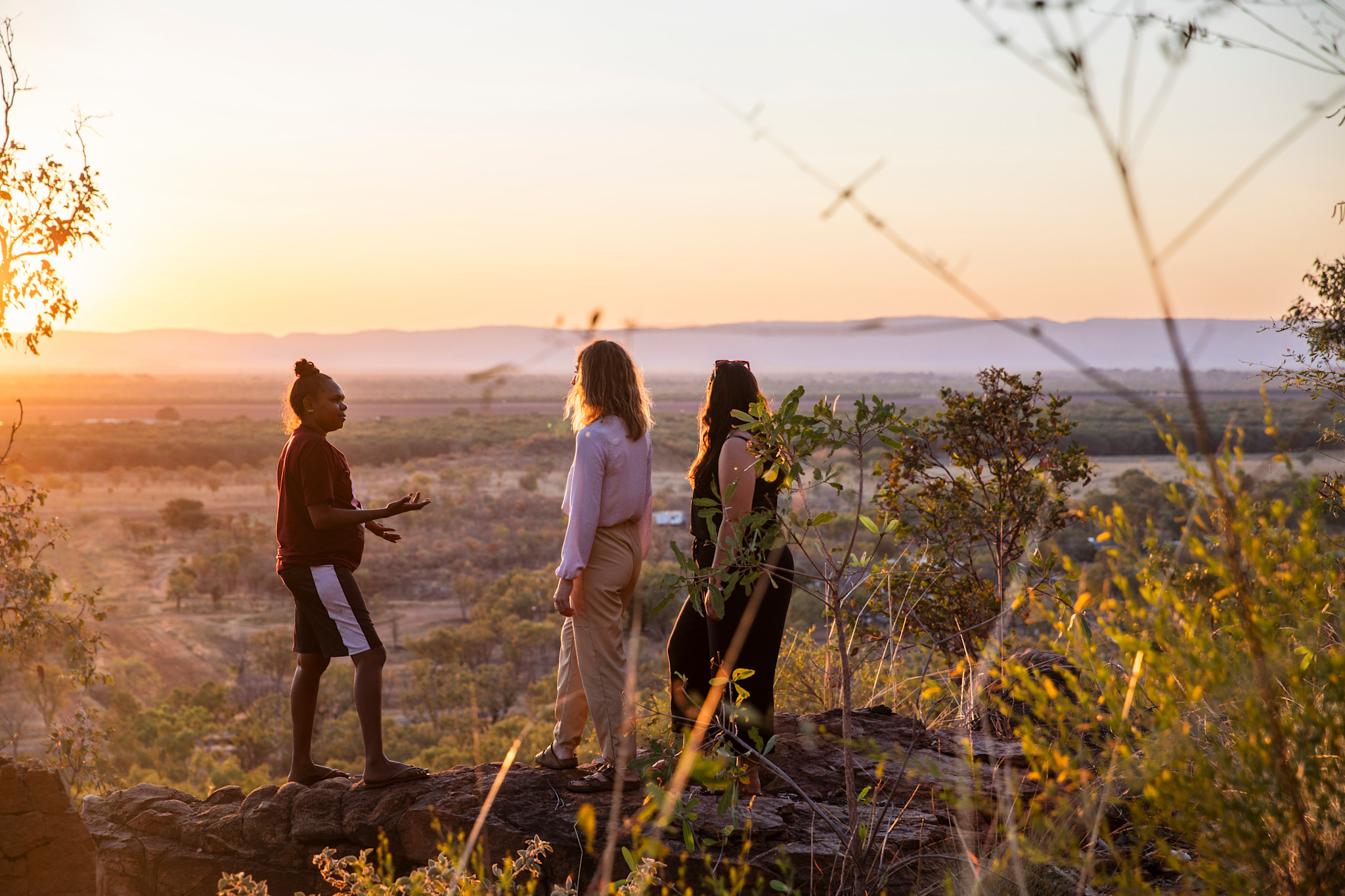
Exploring Kununurra’s surrounds with an Aboriginal guide from Waringarri Aboriginal Arts in Western Australia © Tourism Australia
Kununurra: creative economies that give back
Operator: Waringarri Aboriginal Arts
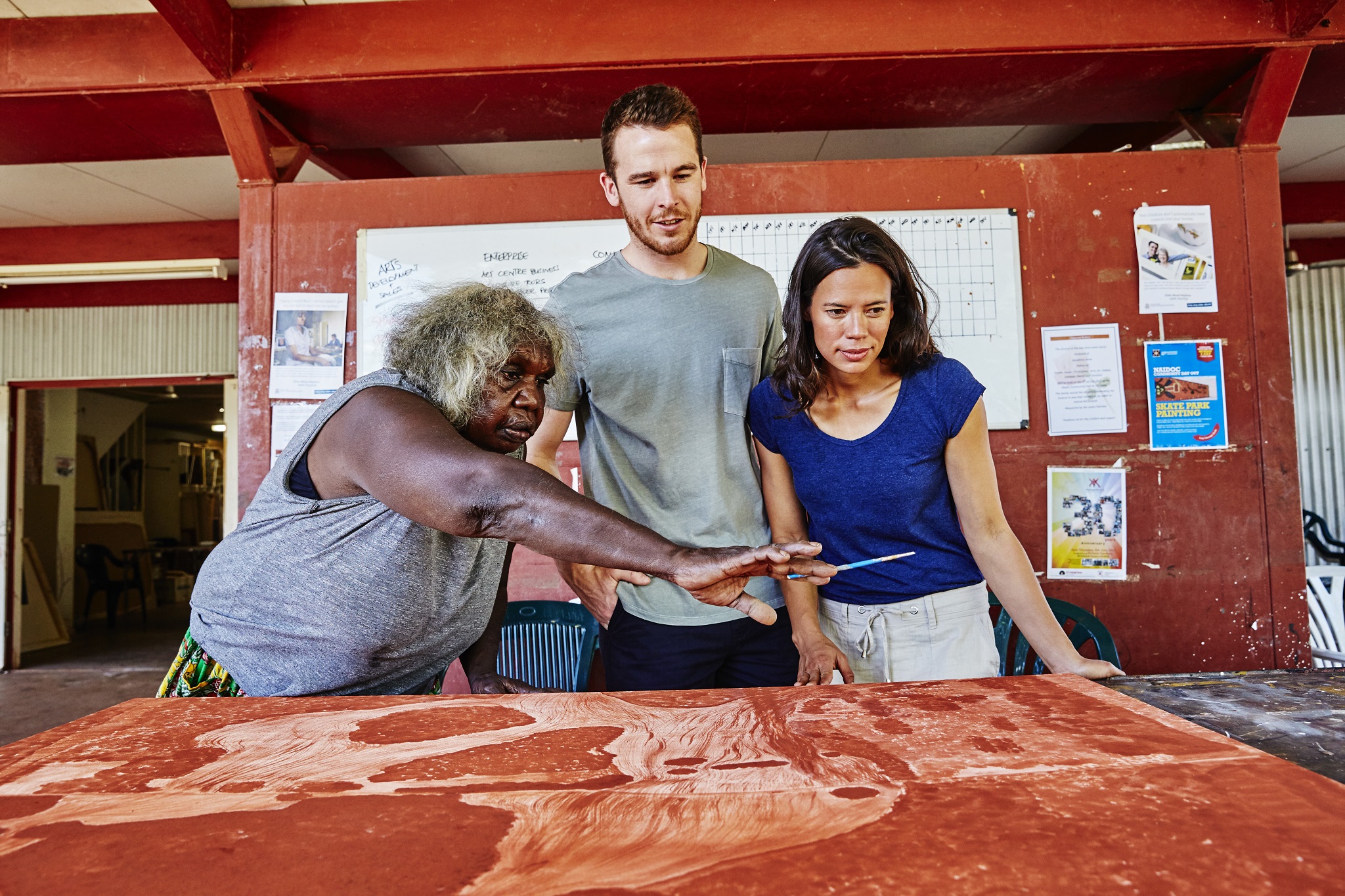
In the East Kimberley, Waringarri Aboriginal Arts doesn’t just operate as a gallery – it’s a full circular economy in action. Here, senior artists teach younger generations, who go on to produce artworks, lead cultural tours, or assist with curation and event planning. Every piece sold supports not just the individual artist, but the wider community programs attached to the centre.
Visitors might join a sunset tour, listen to Miriwoong stories in situ, and return to the gallery to purchase a carved boab nut or ochre canvas. It’s culture shared, reinvested and repeated – an economy of care. This is the future of travel; where nothing is wasted and everything is connected.