Celebrating our oceans through an Indigenous lens
Indigenous peoples have cared for Australia’s oceans for millennia, using deep cultural knowledge, sustainable practices and custodianship of Sea Country.
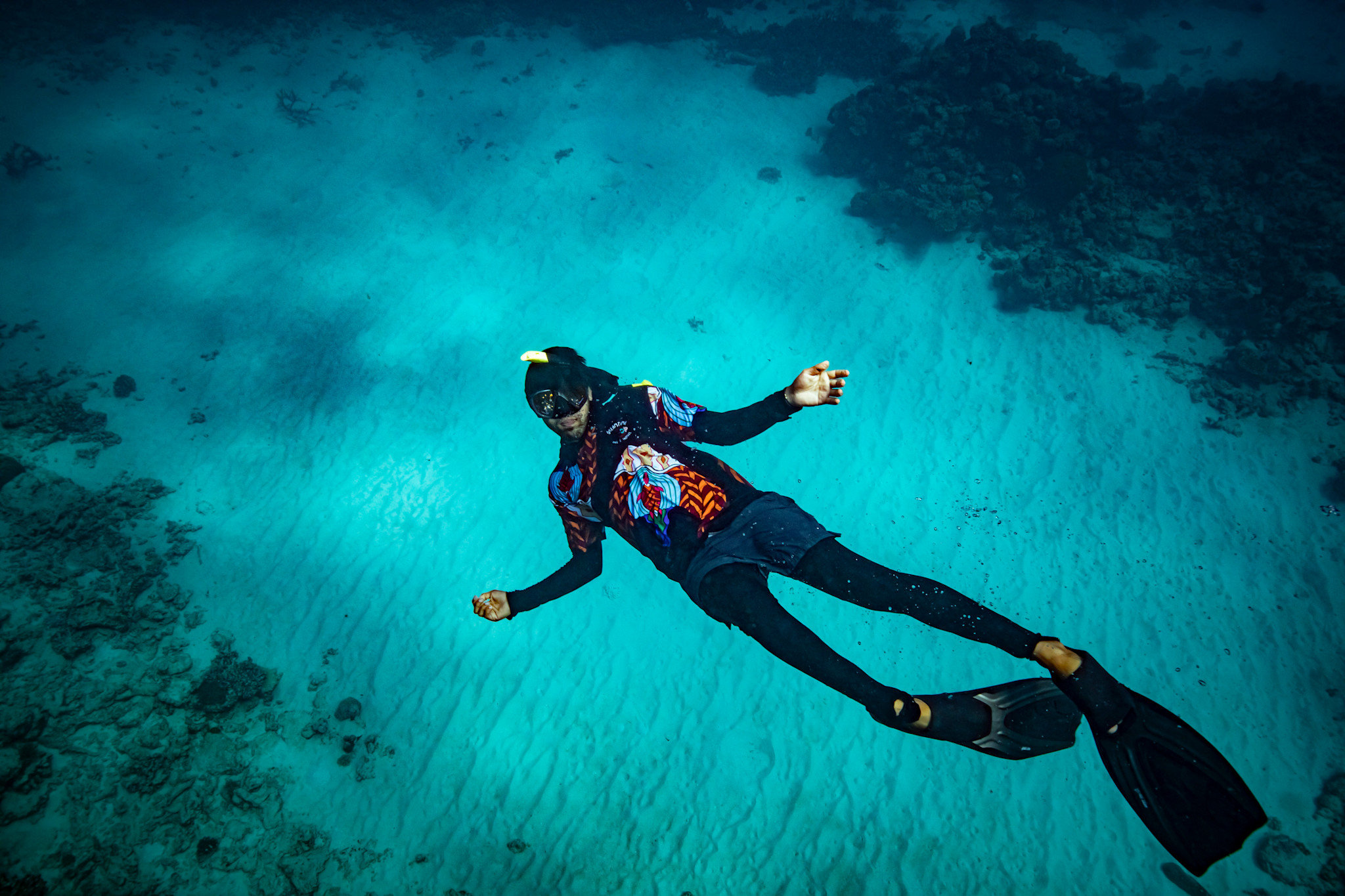
Floating around the Great Barrier Reef with Indigenous guides from Dreamtime Dive and Snorkel, Queensland © Tourism Australia
Aboriginal and Torres Strait Islander peoples have cared for Australia’s oceans for tens of thousands of years, using deep cultural knowledge, sustainable practices and custodianship of Sea Country to ensure they are protected for future generations.
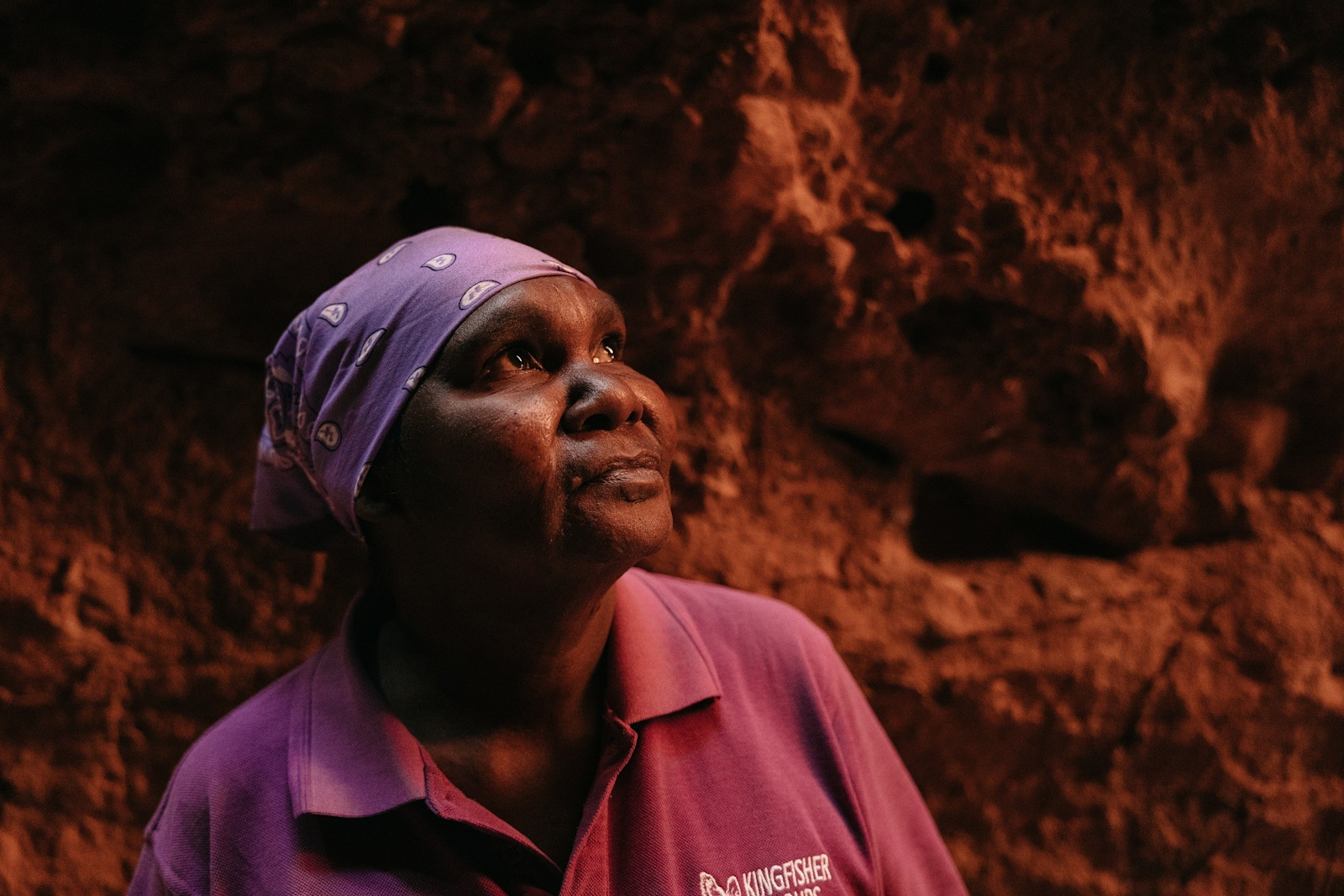
“If we care about and look after Mother Nature, it can bounce back and thrive,” says Darkinjung woman Natalie Smith, a Senior Marine Biologist and Master Reef guide with GBR Biology, part of the Experience Co family that facilitates Indigenous experiences across the Great Barrier Reef via Dreamtime Dive & Snorkel. “Tourism is at the forefront of conservation,” says Natalie. “When you learn about something, you want to spread that knowledge and protect it.”
Oceans cover more than 70 per cent of the Earth’s surface, produce much of the oxygen we breathe and play a vital role in climate regulation, biodiversity and food security. For Australia – an island continent with more than 34,000 kilometres of coastline and one of the world’s largest marine jurisdictions – healthy oceans are central not only to ecosystems, but to identity, culture and tourism.
For millennia, Aboriginal and Torres Strait Islander peoples have sustainably managed Sea Country through sophisticated systems of seasonal knowledge, cultural protocols and environmental stewardship. Long before modern conversations around sustainability and regenerative tourism, Indigenous communities understood the importance of taking only what was needed, protecting breeding grounds, observing seasonal cycles and maintaining balance between people and nature.
“Indigenous communities have long known to only take what they need, nothing more. When you look after our oceans, they look after you,” says Natalie. “First Nations peoples were the world’s first scientists. And now on the Great Barrier Reef we merge that knowledge with modern-day science.”
Today, members of the Discover Aboriginal Experiences collective continue to share this knowledge through immersive Indigenous-guided tourism experiences across Australia – from the Great Barrier Reef and tropical estuaries to remote islands, marine parks and ancient coastal middens.
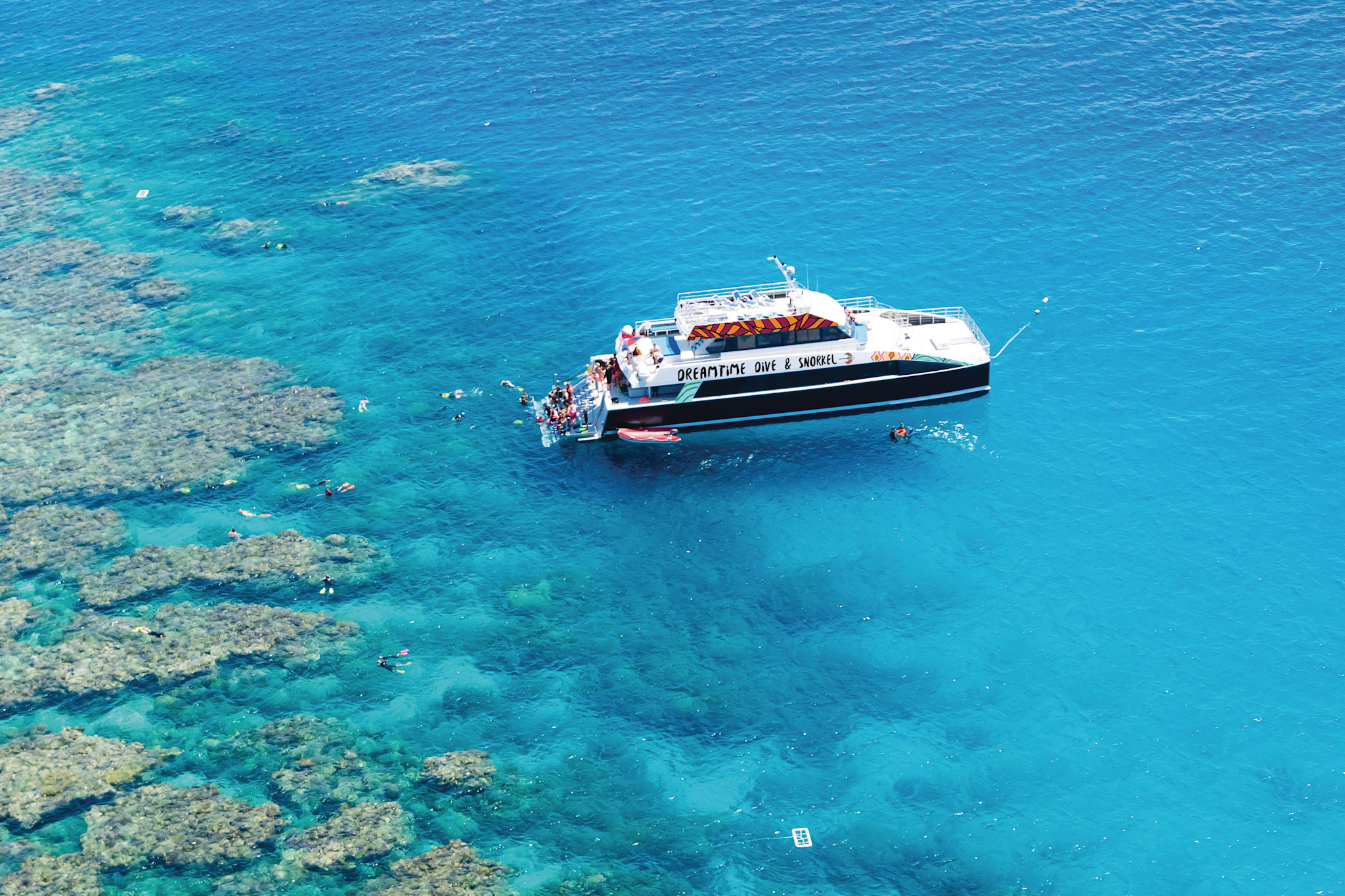
Join Indigenous guides to learn about the significance of the Great Barrier Reef with Dreamtime Dive and Snorkel, Queensland © Tourism Australia
Along the Great Barrier Reef in Tropical North Queensland, Dreamtime Dive & Snorkel offers visitors the opportunity to experience the world’s largest coral reef system through both scientific and cultural lenses. Led by Indigenous guides and marine biologists like Natalie, experiences share Aboriginal Creation stories connected to the reef alongside contemporary marine knowledge, offering a deeper understanding of one of the planet’s most important ecosystems.
Visitors snorkelling on the reef learn not only about coral, marine species and biodiversity, but also the cultural significance of Sea Country and the responsibility Aboriginal and Torres Strait Islander communities continue to hold in protecting it. “There’s a feeling when you first dip your head under water here that you just can’t explain,” says Natalie. “There’s an immediate connection with Mother Nature. I love seeing guests’ faces light up after the experience. I still get giddy myself!”
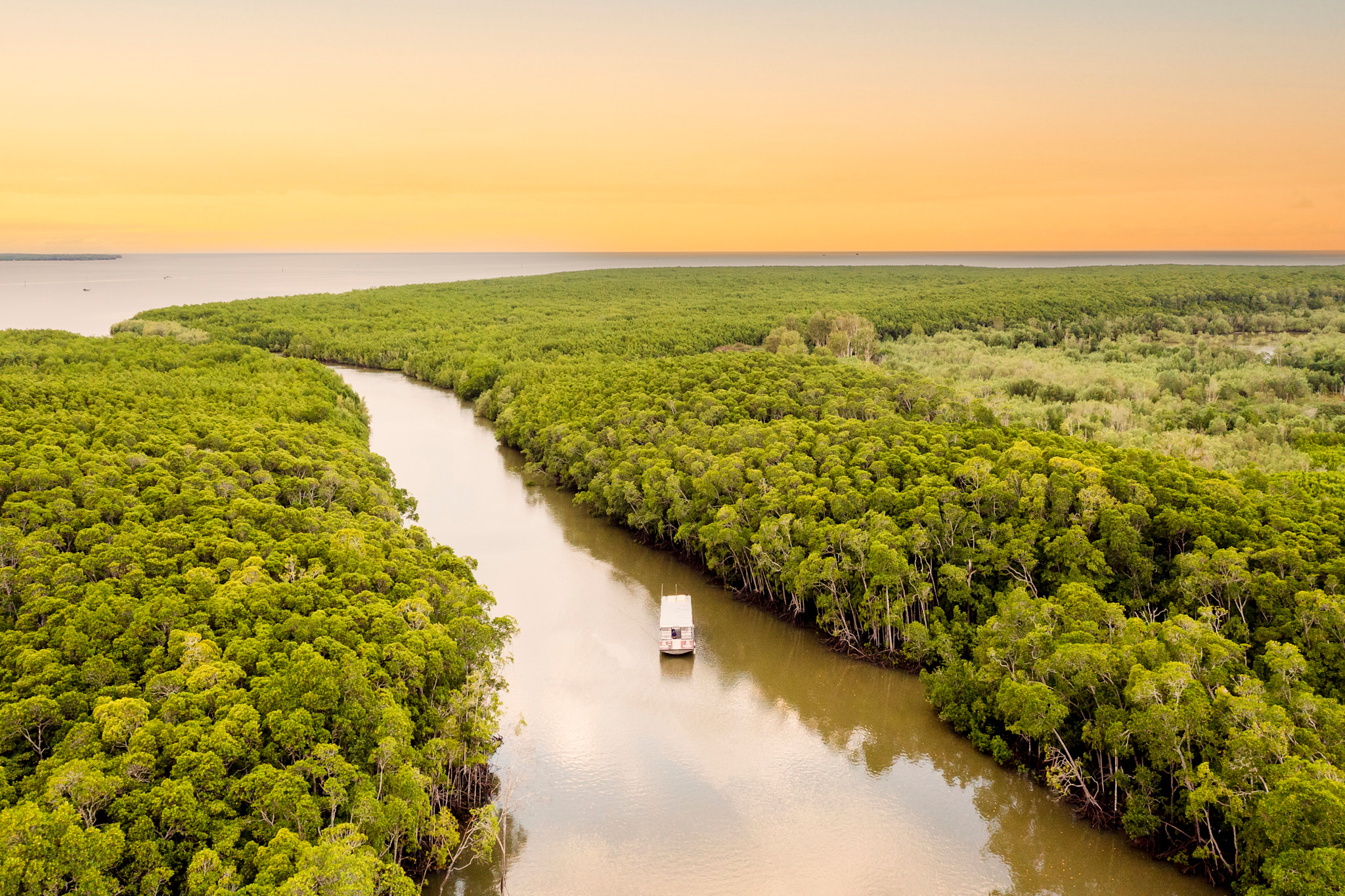
Cruising around Cairns in Queensland, learning about Sea Country with Mandingalbay Authentic Indigenous Tours © Tourism Australia
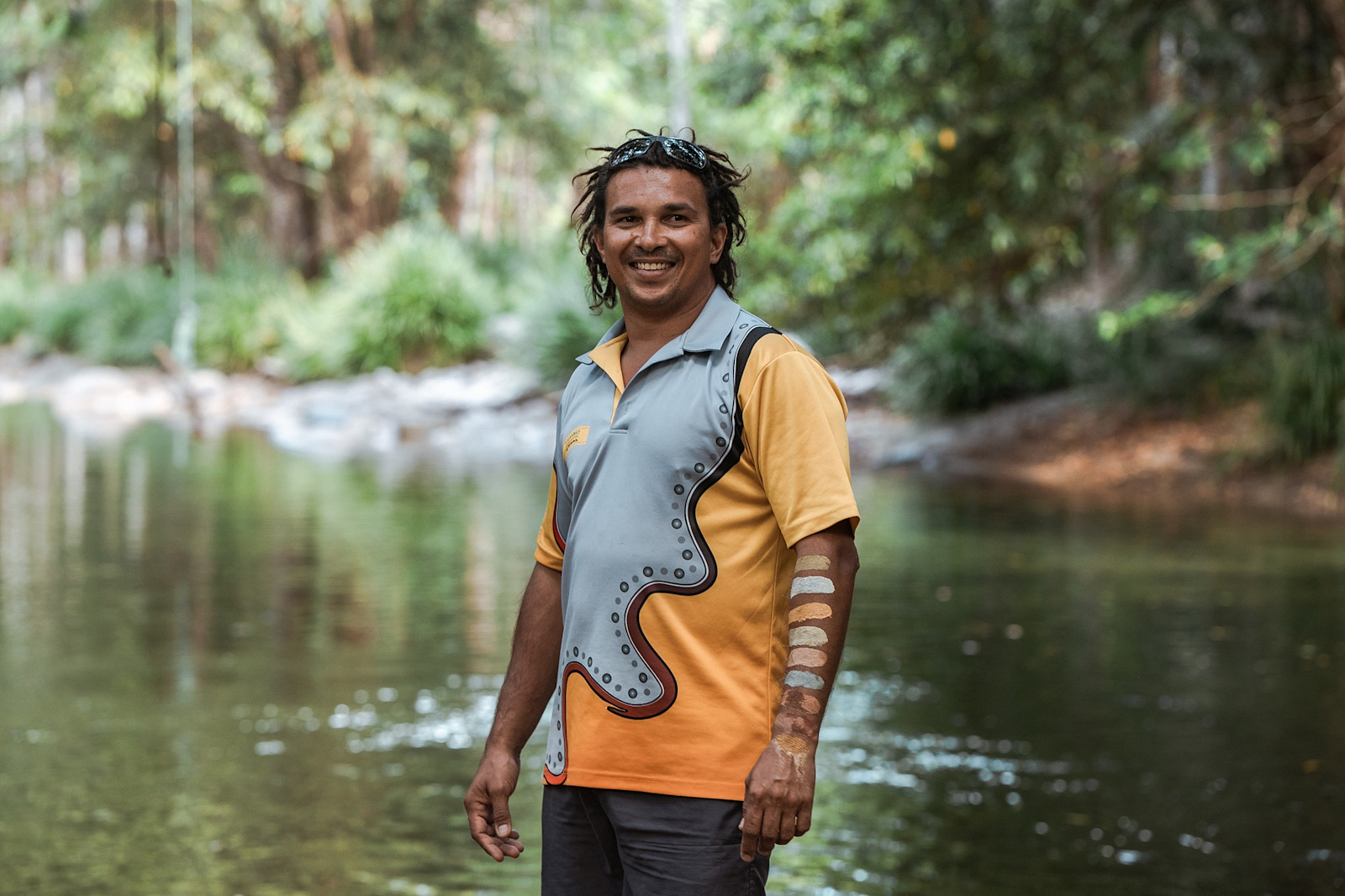
Also in the Cairns / Gimuy region, Mandingalbay Authentic Indigenous Tours explores the ecologically significant waterways and estuaries surrounding East Trinity Reserve. Travelling through mangrove systems and coastal wetlands with Mandingalbay Yidinji guides, visitors learn about the work Indigenous rangers are undertaking to restore marine habitats and protect fragile ecosystems.
Mangroves are among the world’s most important coastal environments – helping stabilise shorelines, support biodiversity and store significant amounts of carbon – and the experience highlights the vital role Indigenous-led conservation plays in protecting them for future generations.
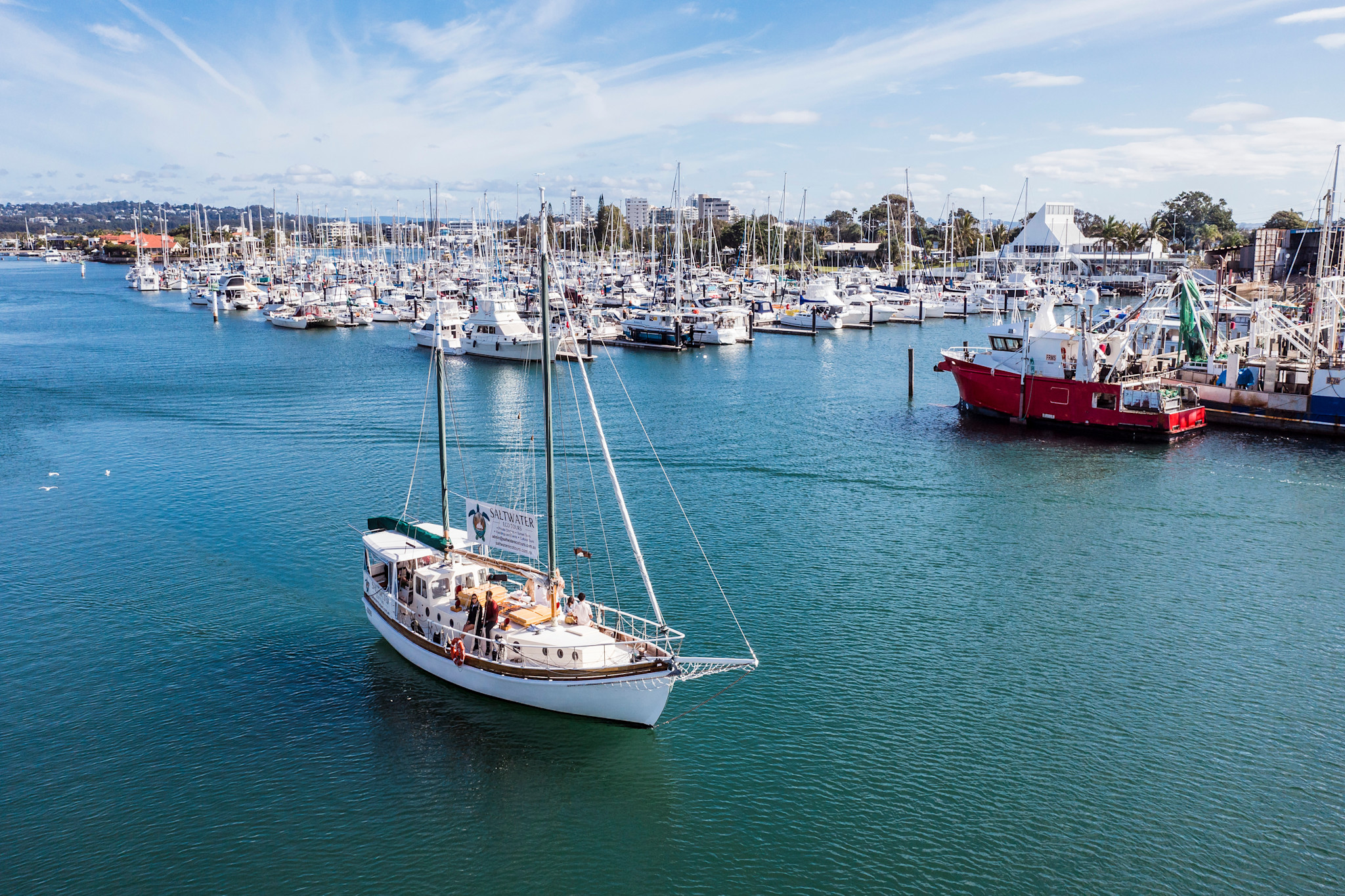
Cruising the waterways of the Sunshine Coast, Queensland, with Saltwater Eco Tours © Tourism Australia
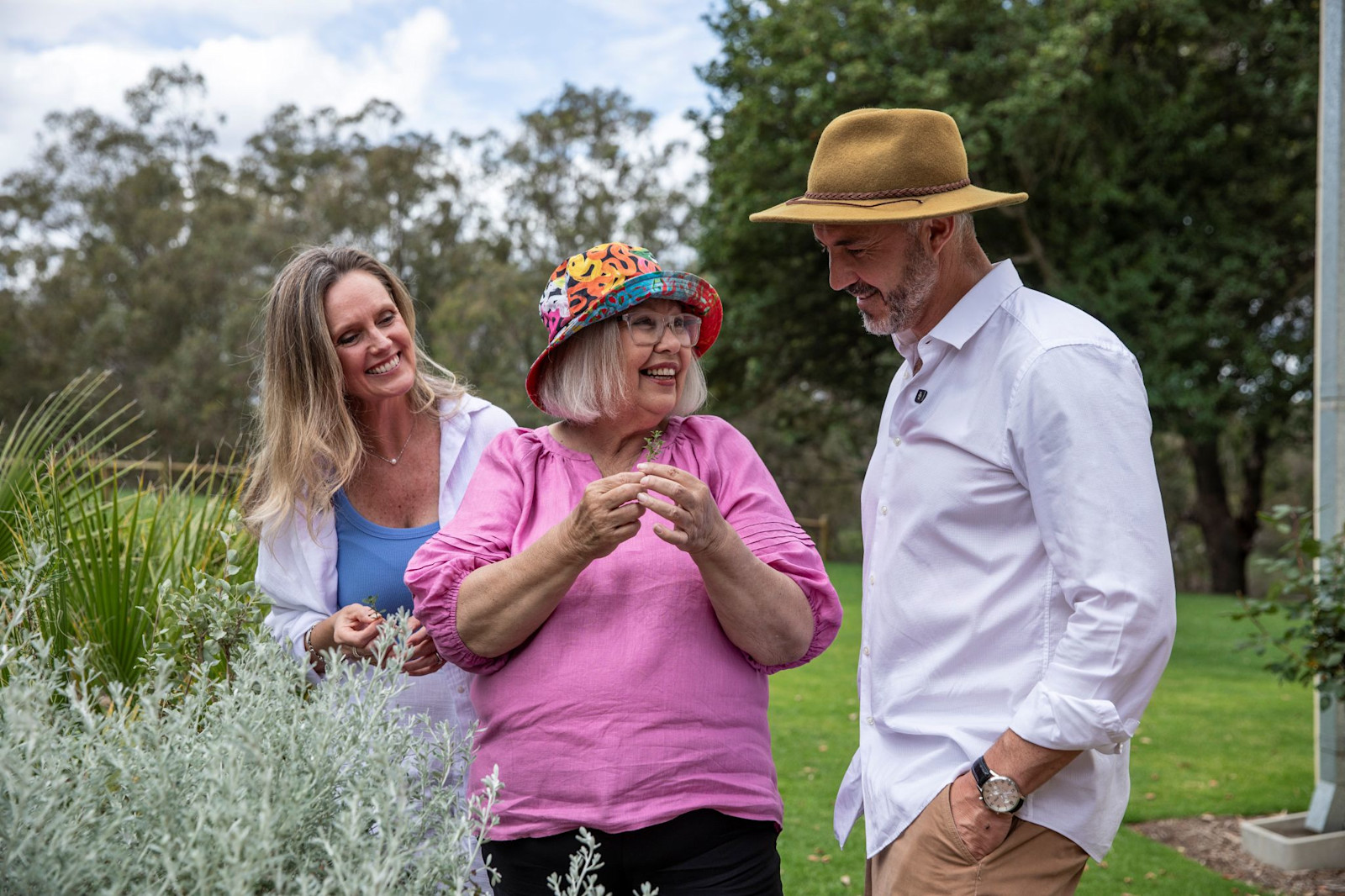
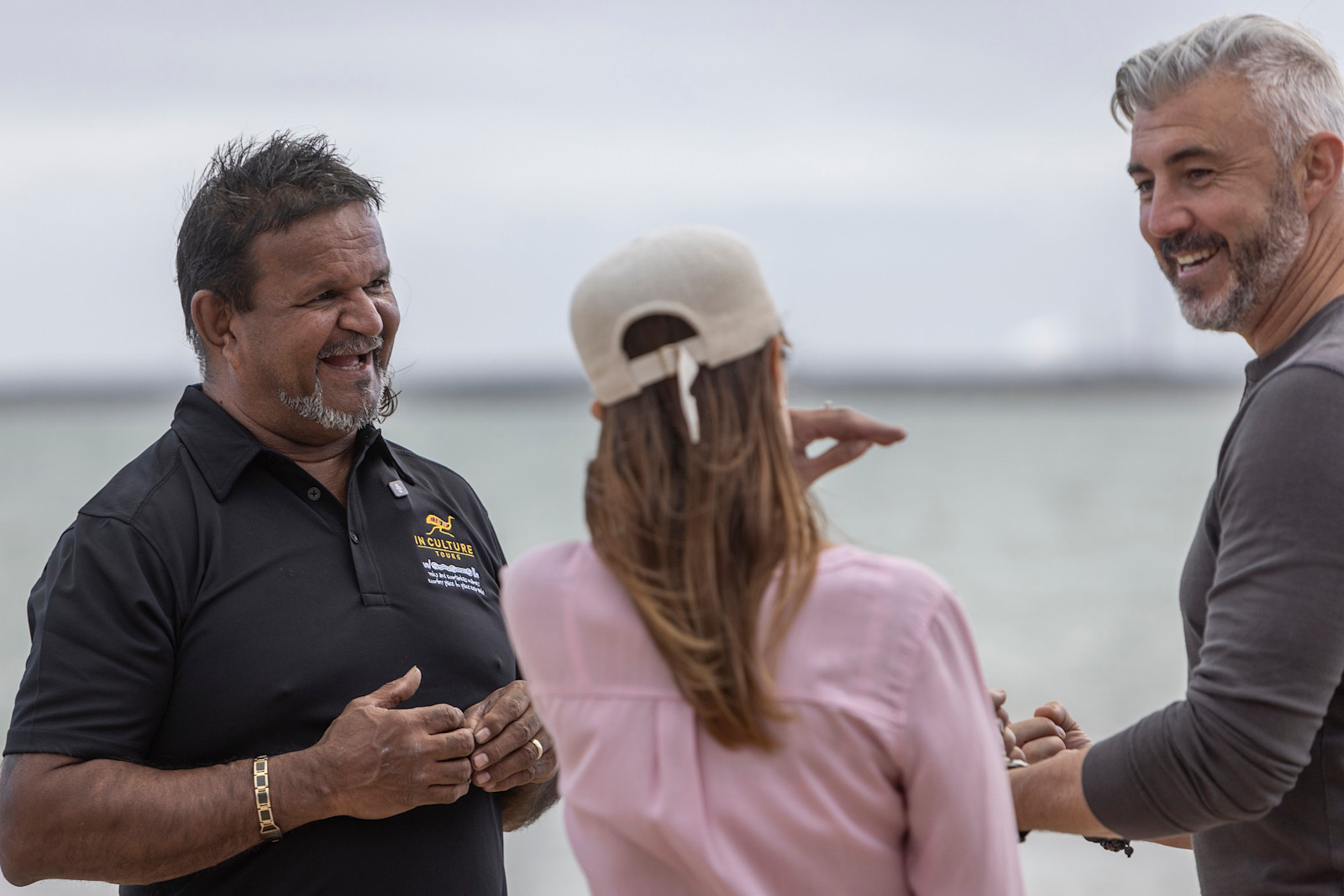
Further south, Saltwater Eco Tours takes guests onto the waterways of the Sunshine Coast, where founder Simon Thornalley shares stories shaped by a lifetime spent on the ocean. Having grown up on boats and on Country, Thornalley weaves together cultural storytelling, sustainable fishing practices and environmental knowledge while cruising through ecosystems rich in marine life.
The experience offers insight into how Aboriginal communities traditionally sourced seafood sustainably, understood tidal systems and maintained strong relationships with Sea Country over generations.
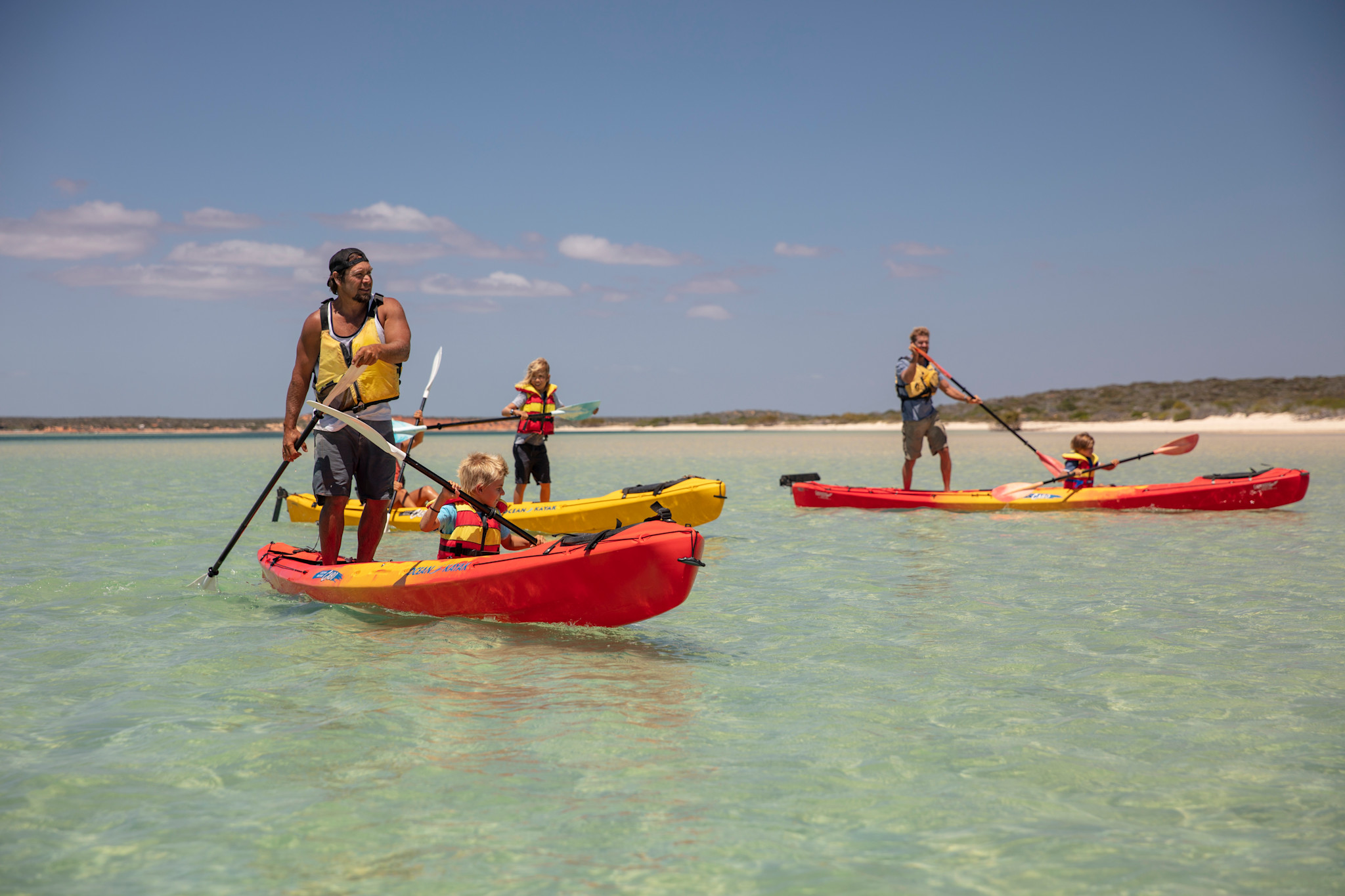
Exploring the waterways of Western Australia’s Shark Bay region in kayaks © Tourism Australia
On the opposite side of the country in Western Australia’s Shark Bay / Gutharraguda region, Wula Gura Nyinda Eco Cultural Adventures immerses visitors in the World Heritage-listed marine landscapes of Malgana Country. Through low-impact experiences including canoeing, walking tours and wildlife encounters, guests discover one of Australia’s most significant marine environments while learning about the deep cultural connections Traditional Owners maintain with the area.
Shark Bay’s seagrass meadows, marine life and coastal ecosystems have sustained Aboriginal communities for millennia, with guide Darren ‘Capes’ Capewell sharing stories of navigation, hunting, seasonal movement and environmental stewardship tied to Sea Country.
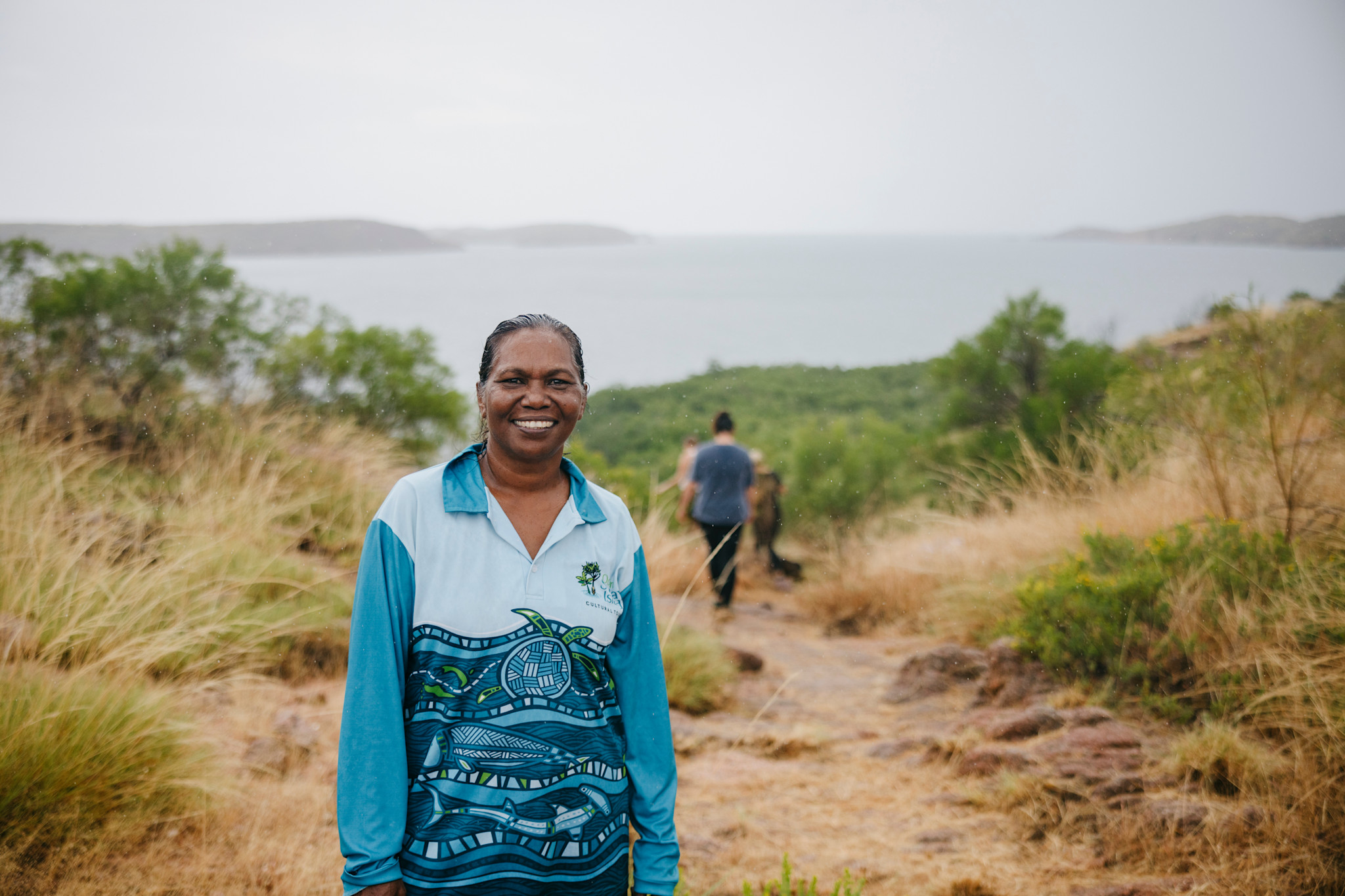
Learning about Sea Country with Oolin guide Rosanna Angus in the Kimberley region of Western Australia © Tourism Australia
Further north along the Kimberley coast, Oolin Sunday Island Cultural Tours offers rare access to the remote islands and coastal environments of the Dampier Peninsula. Led by Bardi Jawi woman Rosanna Angus, experiences explore the relationship the former Sunday Island community maintained with the surrounding ocean – from fishing and hunting traditions to inter-island travel, trade and cultural practices deeply connected to tides and marine rhythms.
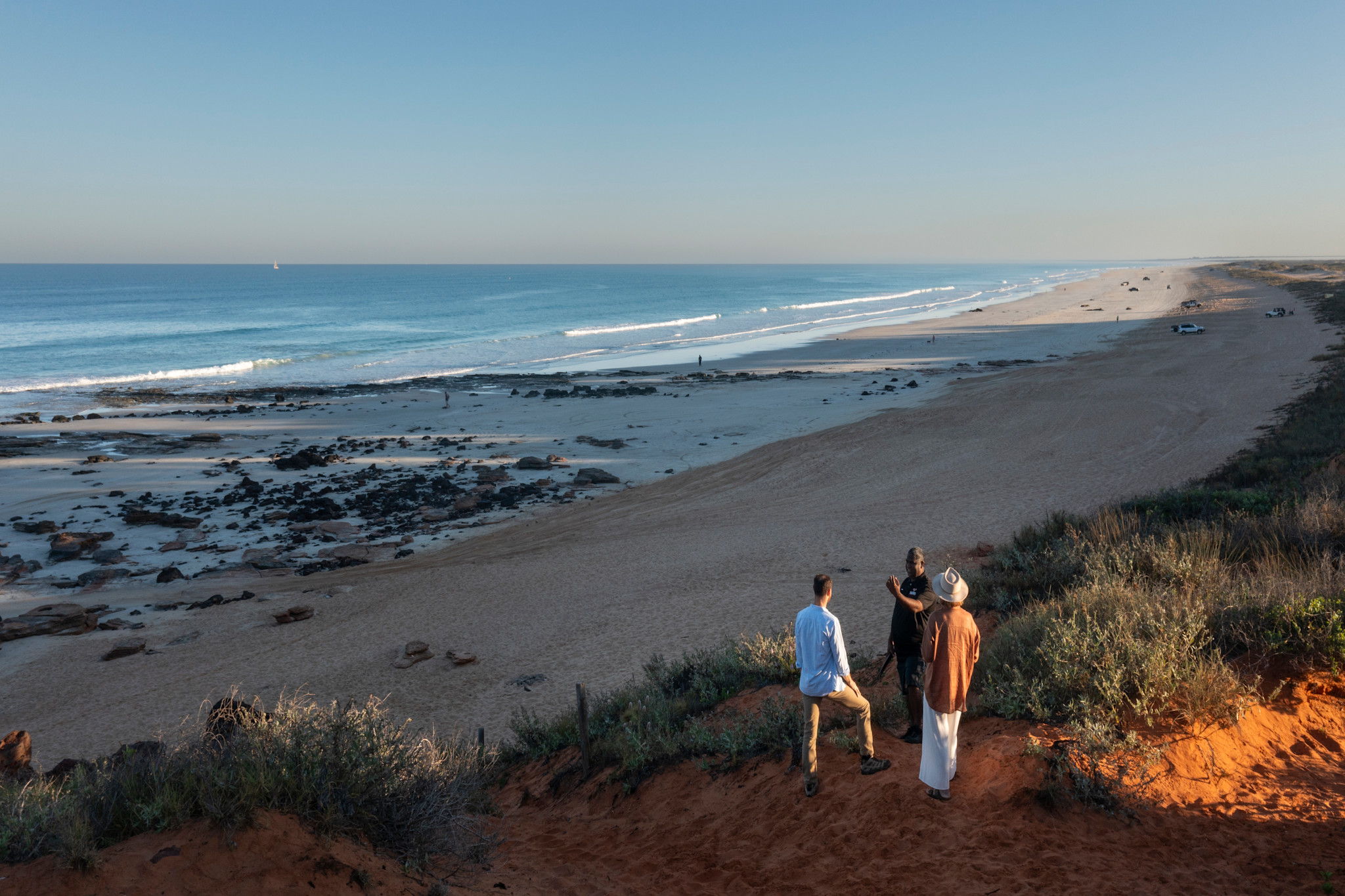
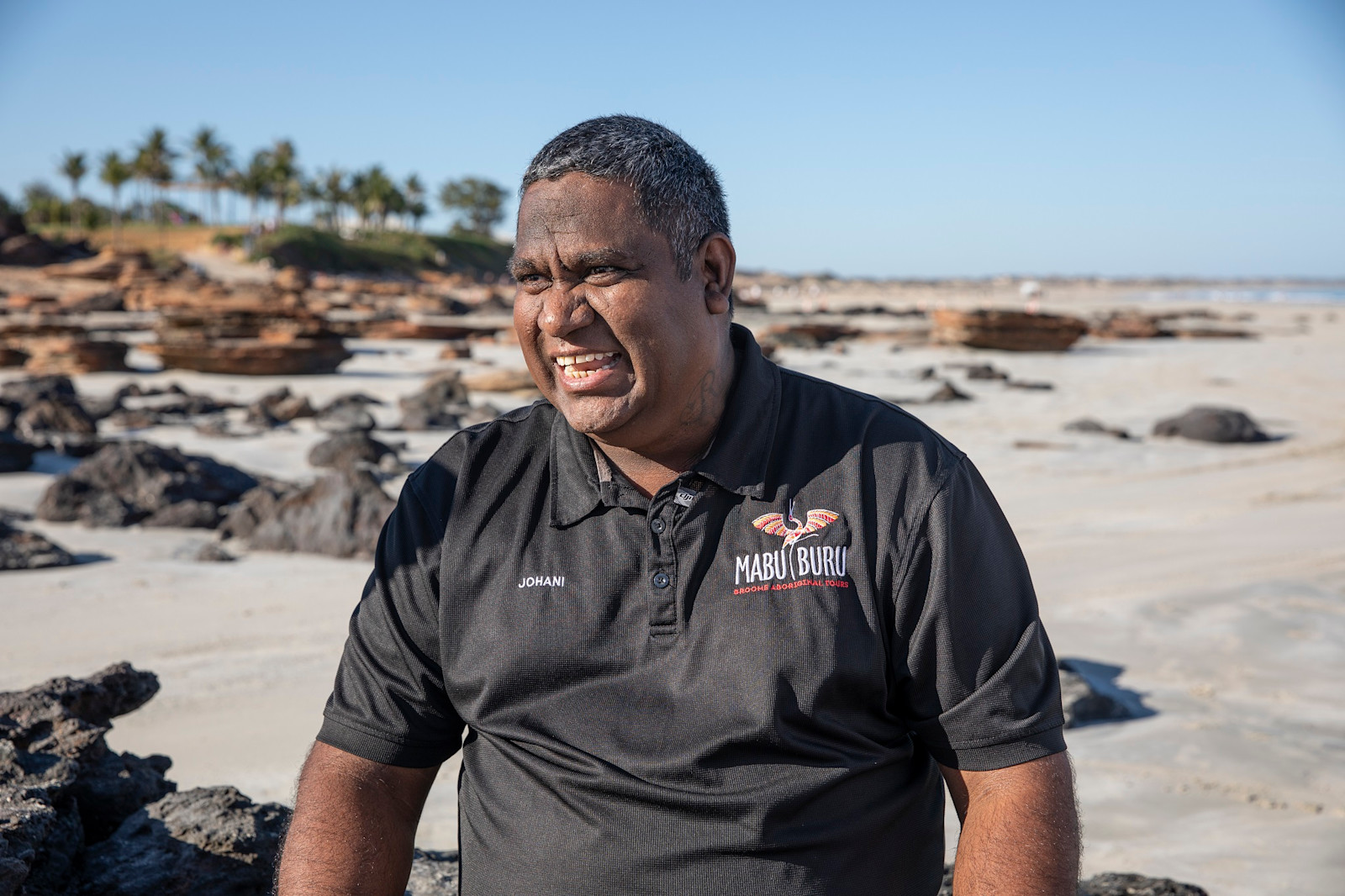
Discovering the beauty of the Kimberley coastline with Mabu Buru guide Johani Mamid © Tourism Australia
Also in the Kimberley, Mabu Buru Tours invites visitors to experience coastal foraging practices that have sustained communities for generations. Guests walk barefoot on Country with guide Johani Mamid, through mangroves and coastal environments, learning how to read seasons, tides and ecosystems to sustainably source seafood and native ingredients before sharing a feast on the beach. The experience offers powerful insight into Indigenous food systems and demonstrates how sustainability has long been embedded in Aboriginal relationships with the ocean and coastline.
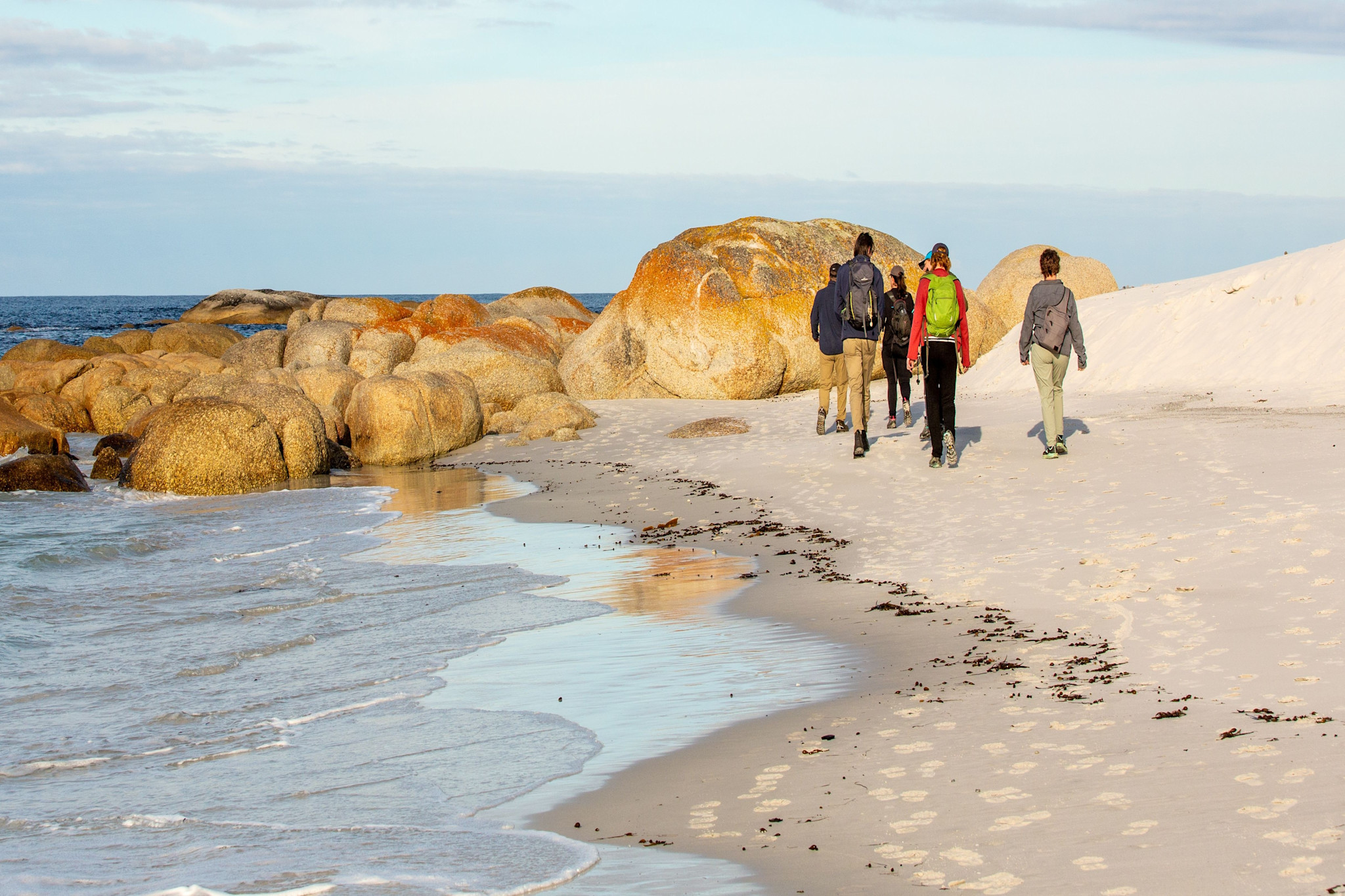
Hiking Tasmania’s east coast with wukalina Walk © Tourism Australia
On Tasmania’s northeast coast, wukalina Walk connects visitors to the cultural and environmental significance of ancient shell middens found along Palawa Country. These middens – formed over thousands of years through the careful harvesting of shellfish and seafood – provide enduring evidence of sustainable marine practices and sophisticated environmental management.
Walking through this coastal landscape with Palawa guides, visitors gain deeper understanding of how Aboriginal communities lived in balance with marine ecosystems over countless generations, taking only what was needed and ensuring resources remained abundant for the future.
As travellers increasingly seek experiences that combine cultural connection, sustainability and nature, Aboriginal tourism continues to offer some of the most meaningful ways to engage with Australia’s marine environments – not simply by observing them, but by understanding the stories, knowledge and responsibilities that have shaped them for millennia.