Carbon‑Positive Tourism: Guided by Lore, Powered by Sun and Story
A new paradigm is emerging in tourism – not just sustainability, but regeneration. Not just net zero, but net positive. And it’s led by Indigenous operators.
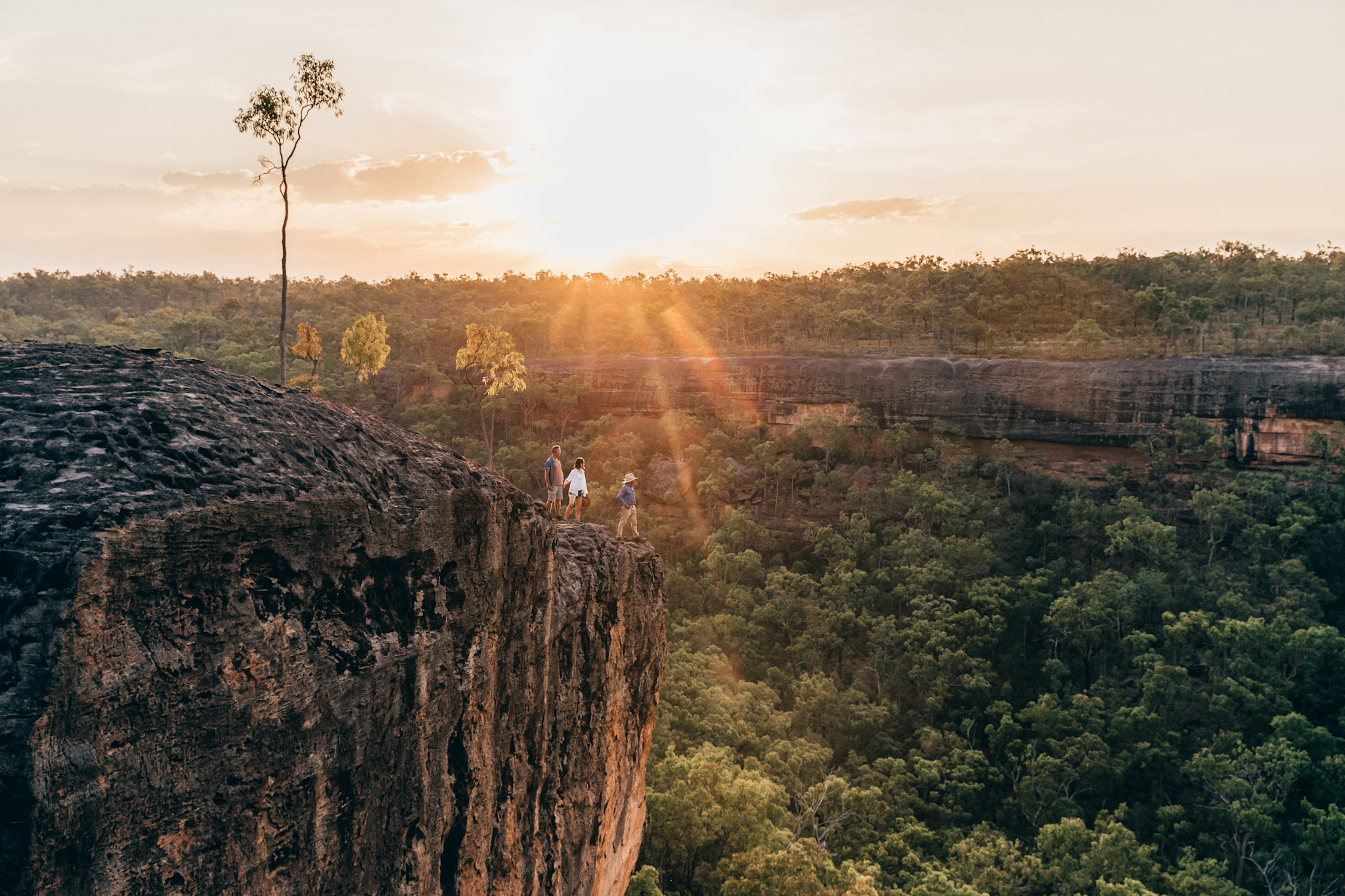
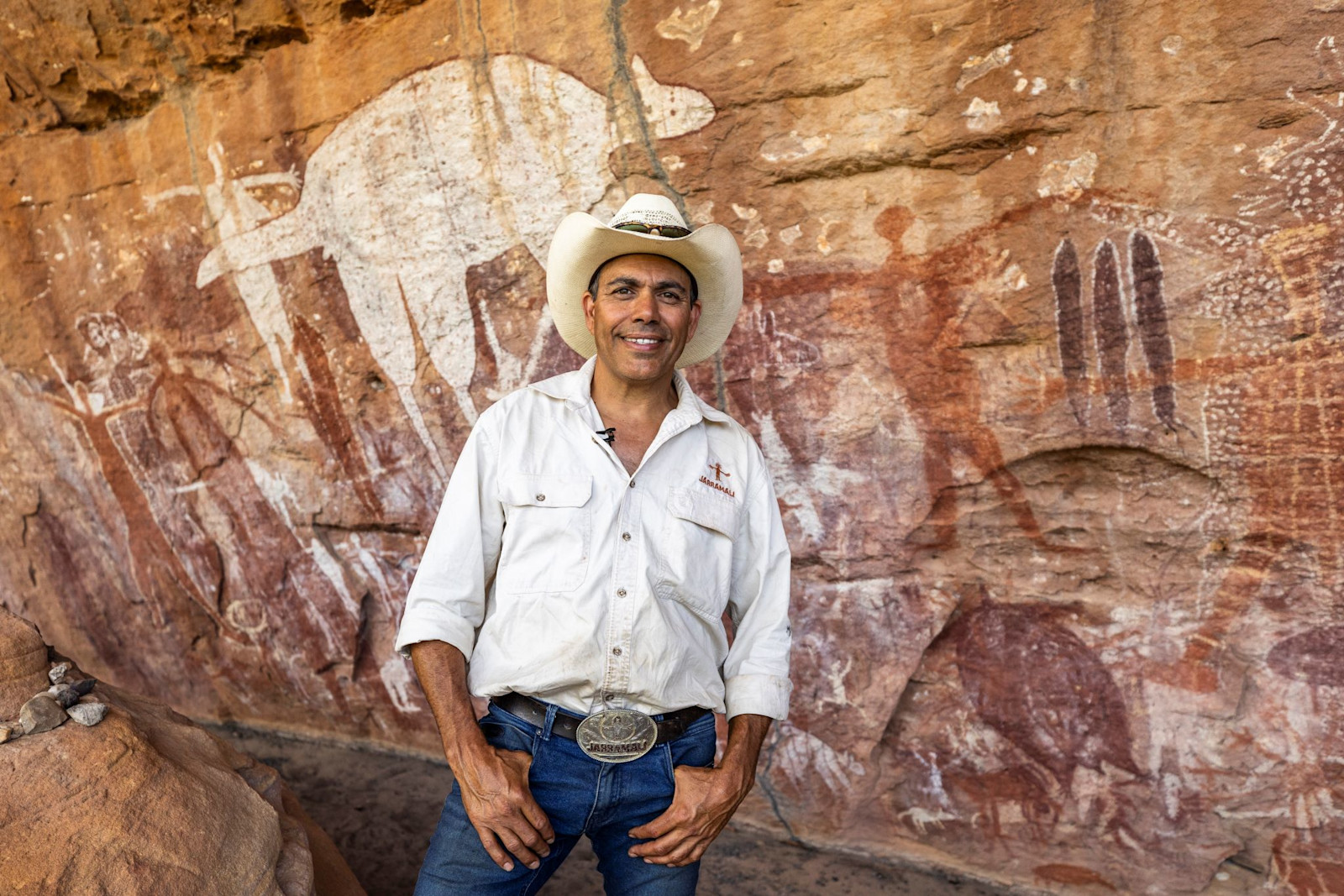
Exploring the Queensland outback on foot with Jarramali Rock Art Tours’ guide Johnny Murison © Tourism Australia
The global tourism industry accounts for around eight per cent of greenhouse gas emissions – with transport, food, accommodation and infrastructure all contributing to a climate footprint that’s growing fast. For decades, the focus has been on reducing impact: use less water, generate less waste, fly less often. But a new paradigm is emerging – not just sustainability, but regeneration. Not just net zero, but net positive.
In this context, carbon‑positive tourism – travel that actively draws down more carbon than it emits – feels revolutionary. But for many Aboriginal tourism operators in the Discover Aboriginal Experiences collective, it’s already happening. Not as trend, but as truth. These are experiences designed with circular logic: they restore ecosystems, sequester carbon, and embed guests in landscapes shaped by sun, wind and story. Cultural narratives aren’t just layered onto the product, they are the infrastructure.
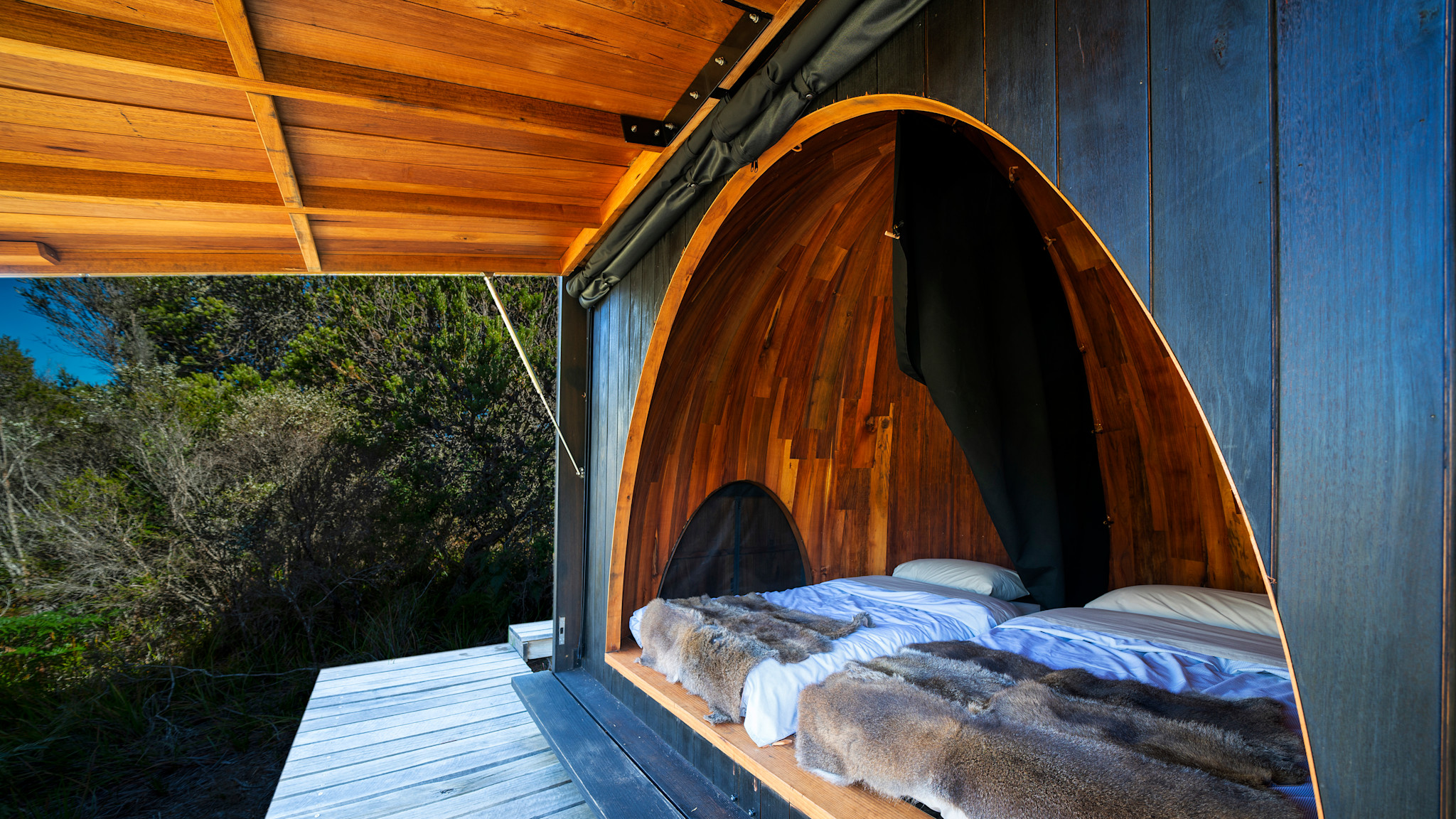
Carbon-positive accommodations along the wukalina Walk trail in northeast Tasmania © Tourism Australia
On Tasmania / Lutruwita’s northeast coast, wukalina Walk is entirely off-grid – powered by solar, water capture and minimal-impact systems. Guests hike from bushland to beach, sleeping in eco-domes that mirror the curve of Country and can be removed from the land without leaving a mark. Meals are seasonal and locally sourced, footprints are light and stories are deep.
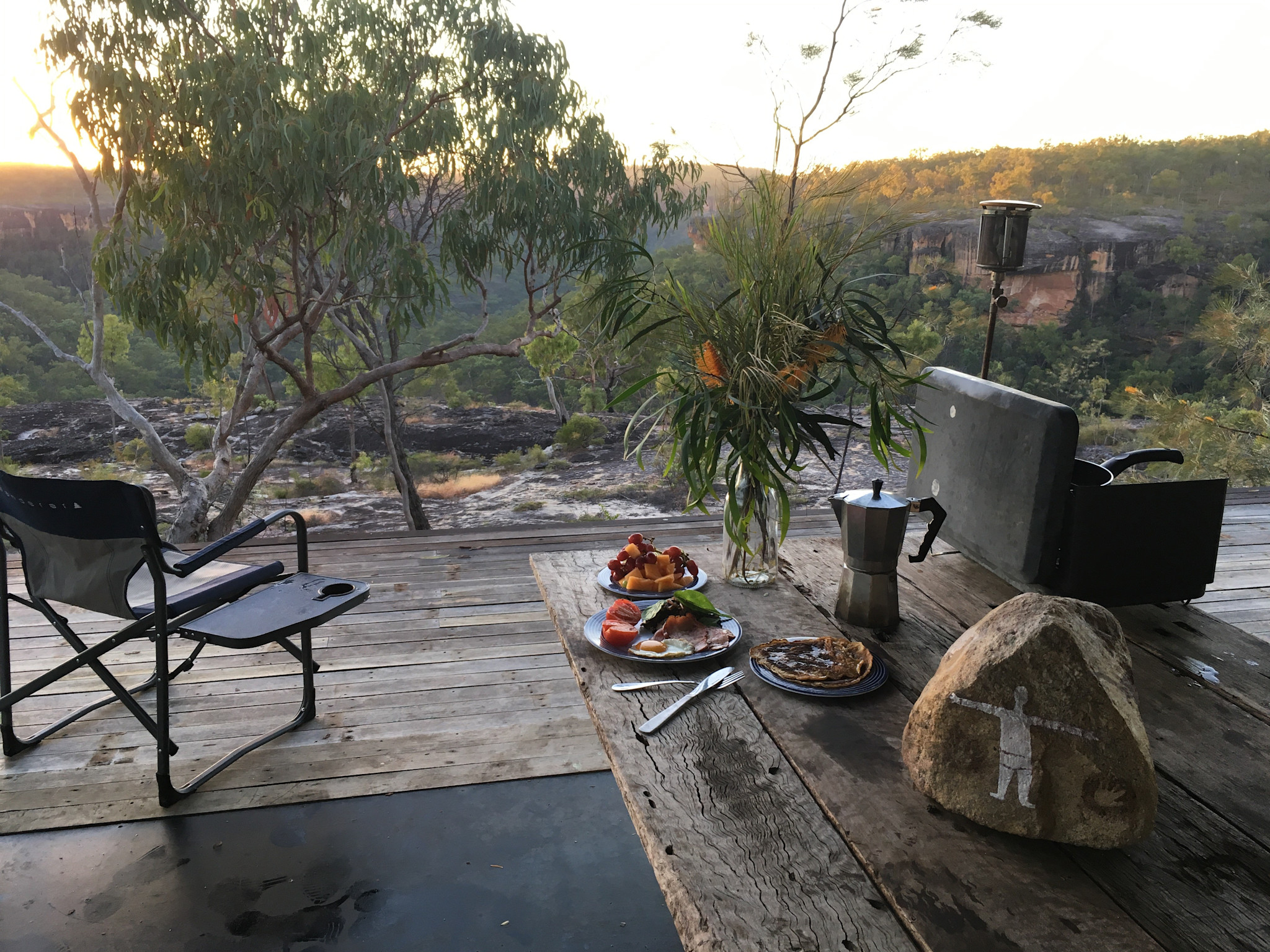
Camping off-grid at an ancient rock-art site in Tropical North Queensland with Jarramali Rock Art Tours © Tourism Australia
In Far North Queensland, Jarramali Rock Art Tours runs off-grid stays deep in the bush outside Laura. There’s no Wi-Fi, no mains power – just ancient Quinkan art, clean energy and stories passed from generation to generation. Even the campfire feels regenerative. It’s a stay that feeds the spirit and lets the land breathe.
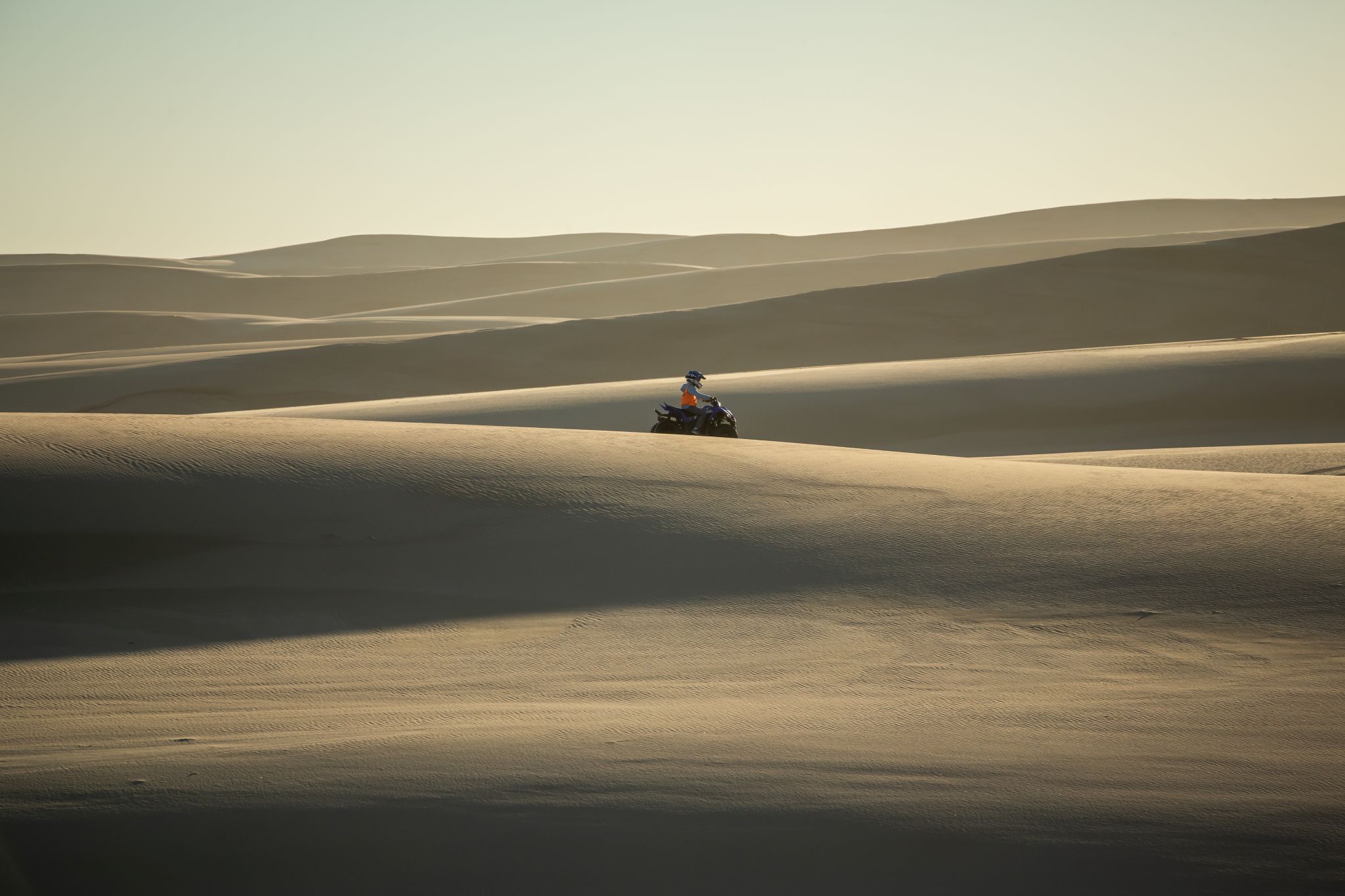
Taking in the spiritual sand dunes around Port Stephens on a quad bike with Sand Dune Adventures, NSW© Tourism Australia
Meanwhile Sand Dune Adventures, on Worimi Country near Port Stephens, goes one step further – replanting native species to regenerate degraded dunes. For every quad-bike adventure across the largest moving Sand Dunes in the Southern Hemisphere, a tiny act of carbon reversal. It’s a boots-on-the-ground approach to climate care.
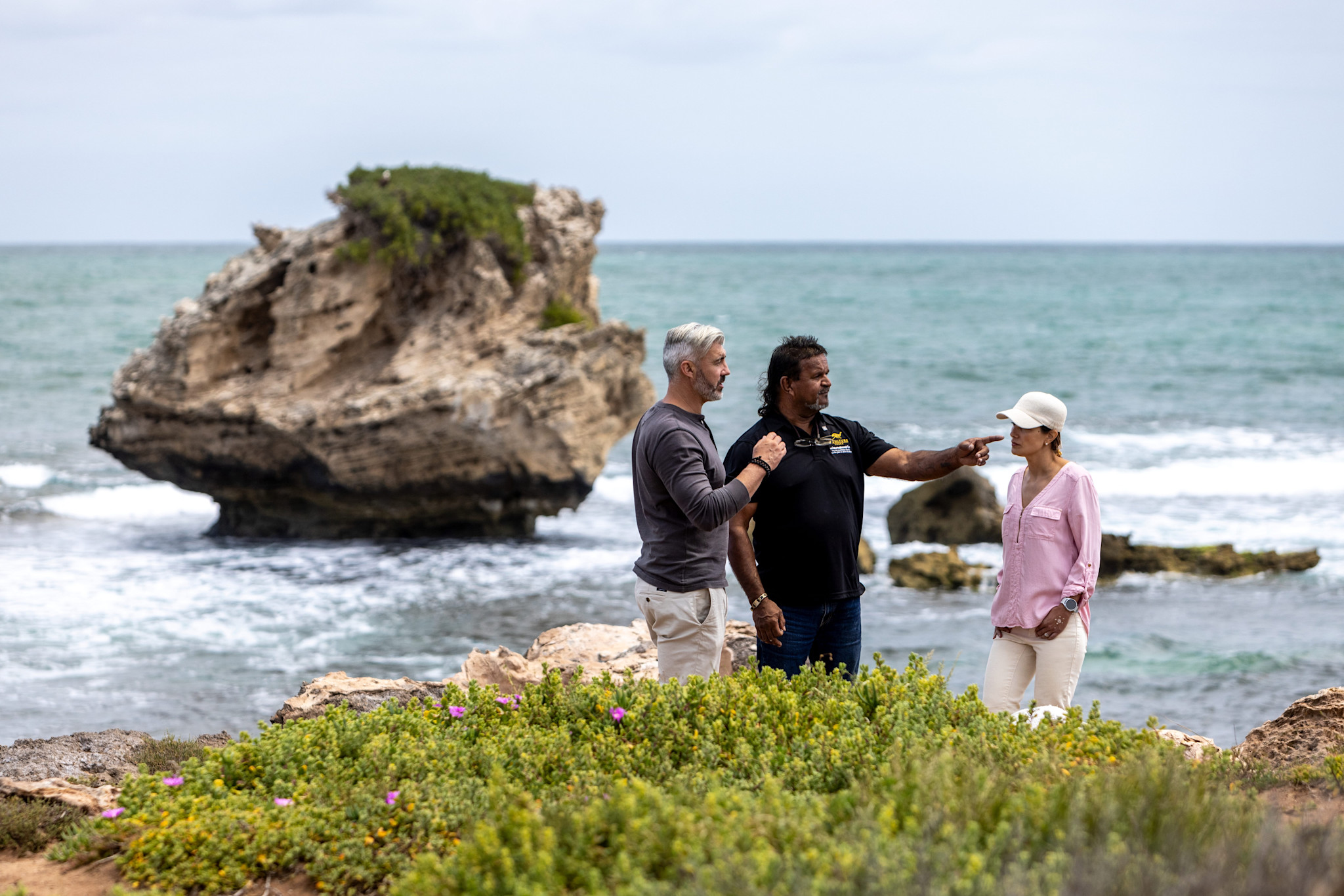
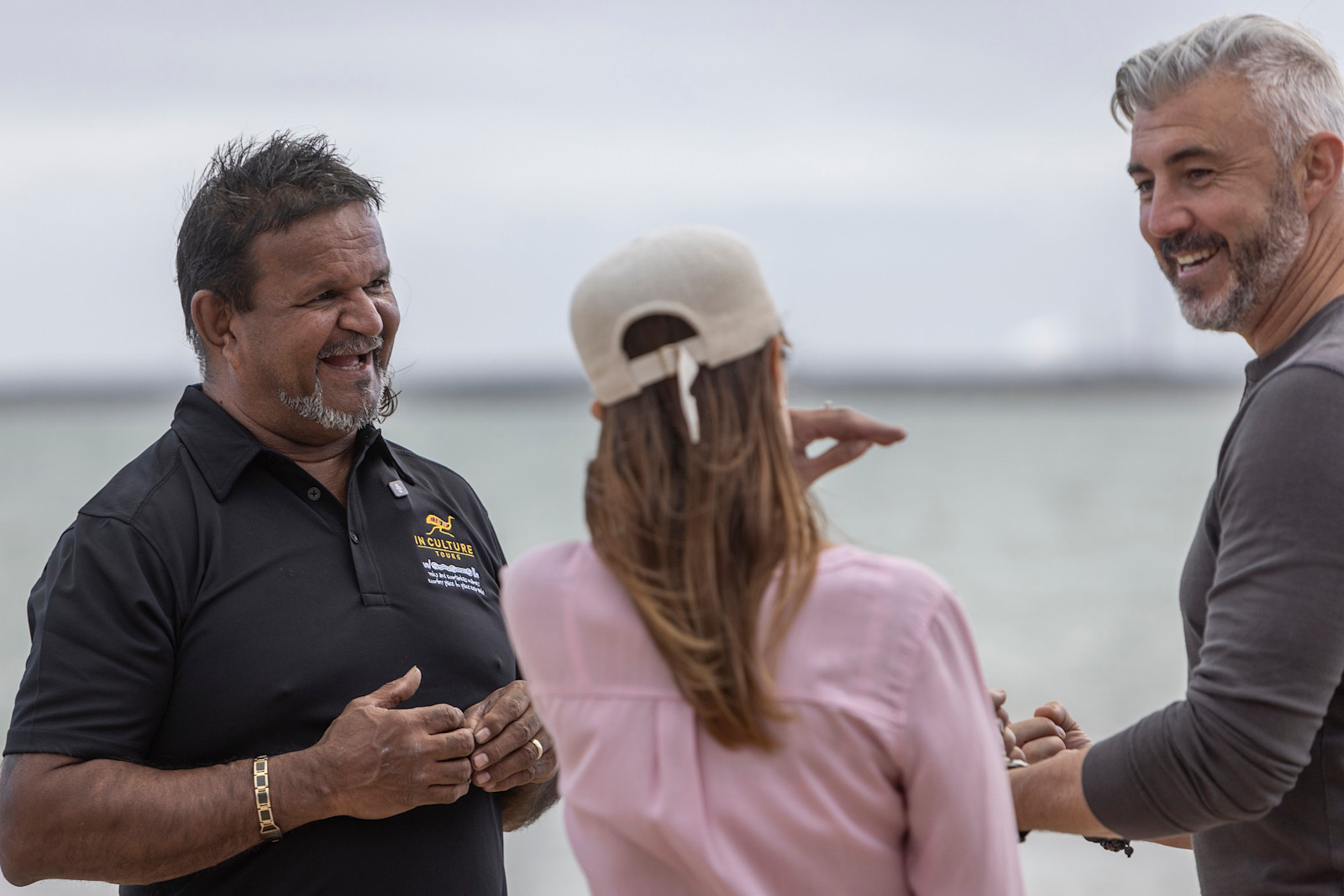
Exploring Western Australia’s coastline on foot with In Culture Tours © Tourism Australia
And some of the best carbon‑positive travel doesn’t involve wheels at all. DAE’s walking tours – like In Culture Tours in Perth and Explore Byron Bay – operate with near-zero emissions. You walk. You listen. You learn. Nothing plugged in; everything plugged back into story. If carbon is a currency, these walks leave credit.